Last visit: 2023. Be aware that this signal and the long-disused and long-disconnected rails are technically on Network Rail land. Nobody is going to notice or care if you stay far away from the nearby active main line. Please be sensible!
I write elsewhere about the bridge very near this signal, and that article gives some background on the short spur from Harbour Junction to the site of South Lynn station. You will want to read those articles first for the historic background.
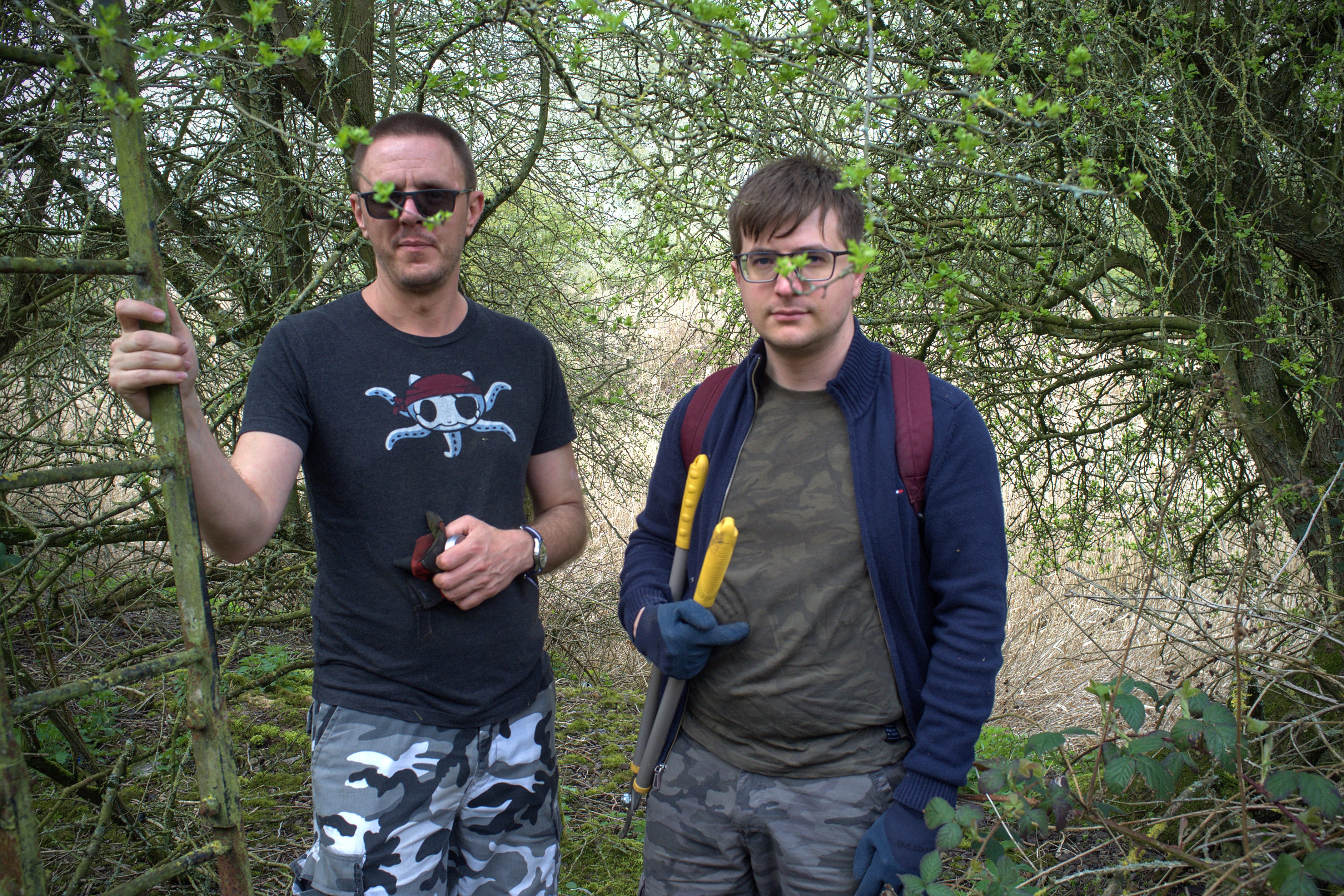
In the undergrowth at our location is a railway signal. It is a colour light signal of fairly modern design; it dates to the early 1980s. (I was born in 1982; for the sake of my ego I’m going to call that “modern”, like electronic music and Ford Sierras.)
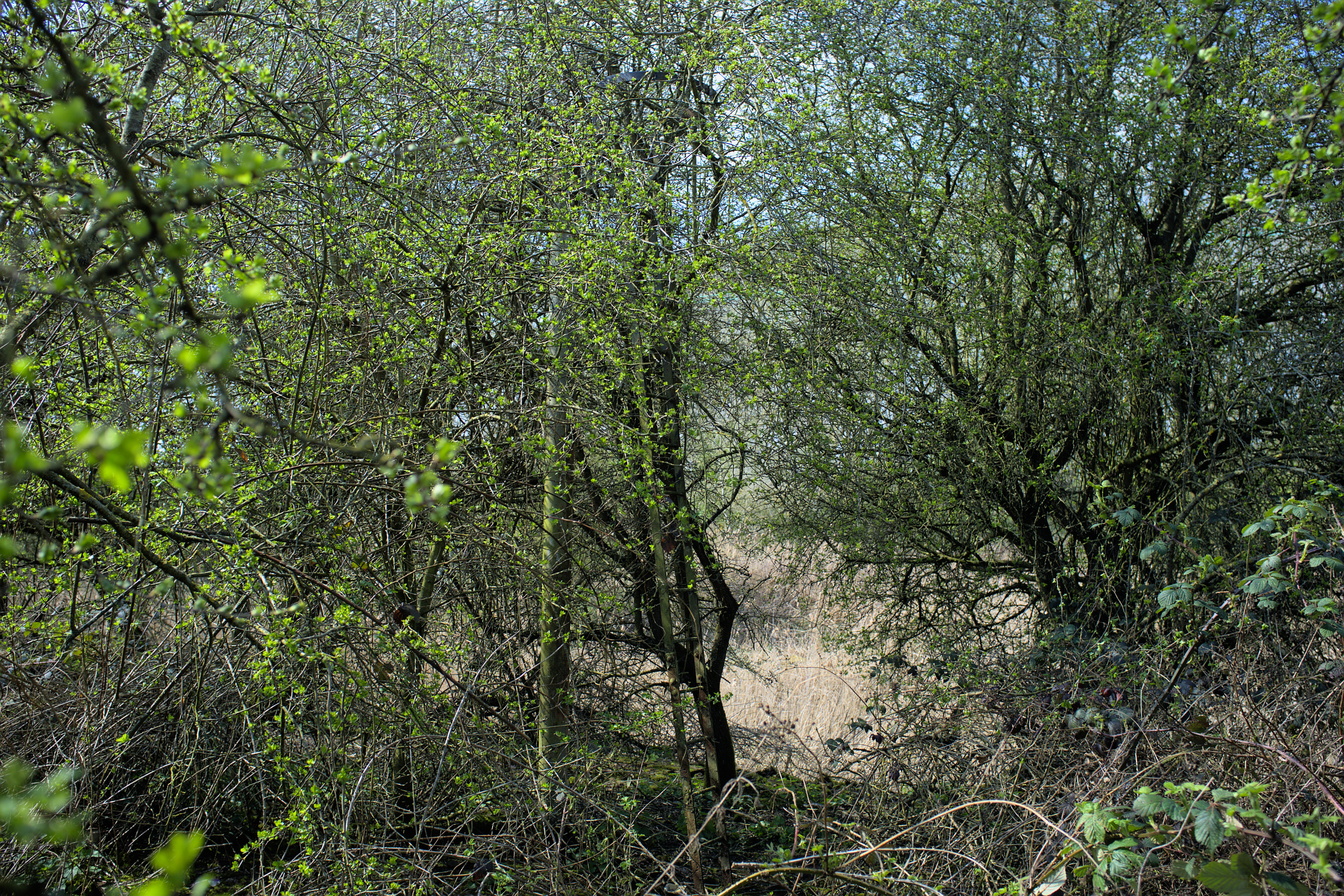
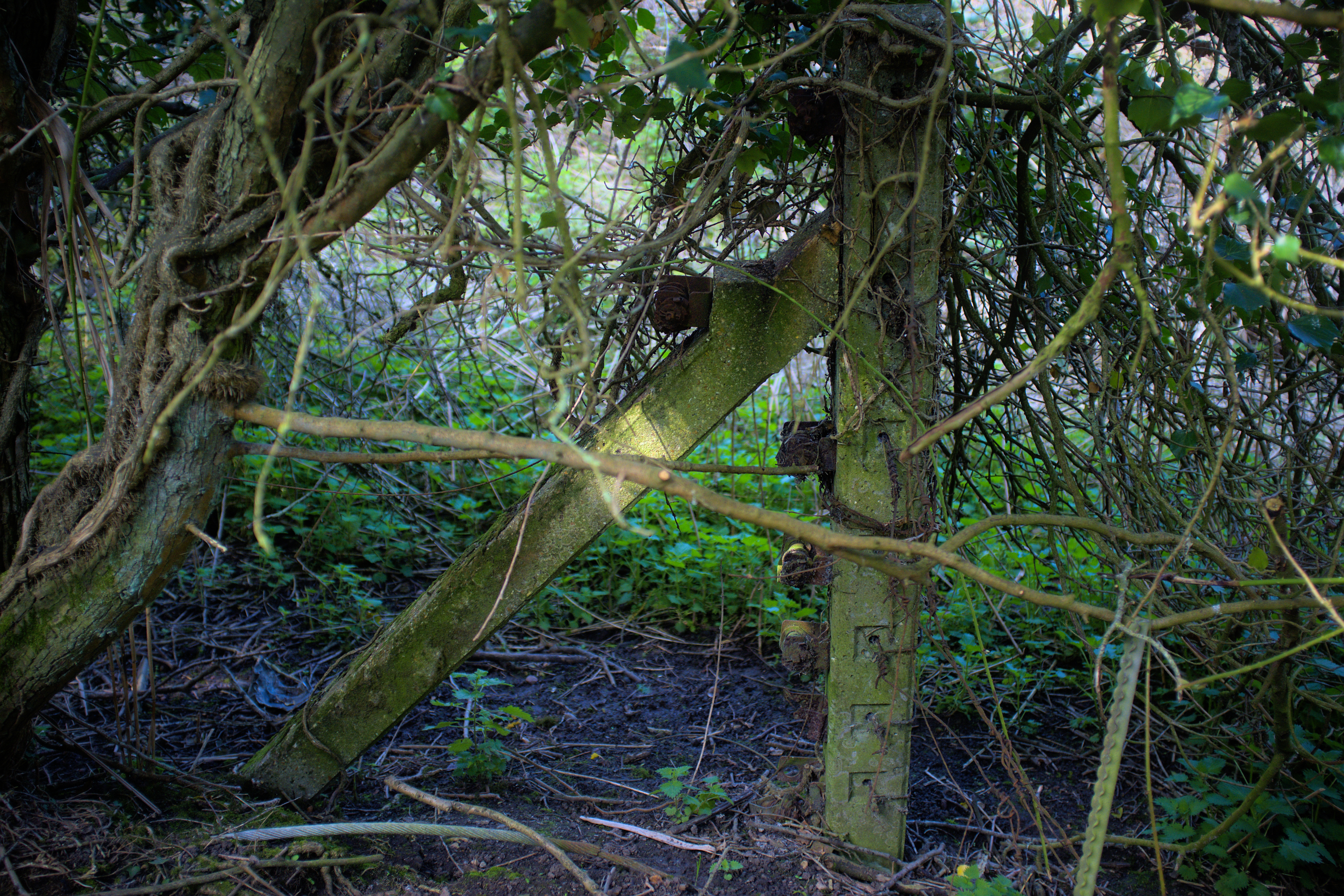
If you didn’t know it was there, you would not know it is there. Even if you did know it was there, you would have to pay attention to know it was there. As the foliage takes over the signal is gradually becoming more inaccessible, green moss blending it in with the undergrowth overtaking it.
Back when I first photographed it in 2007, it was rather more visible. The photo was also a lot nicer, despite my having much less experience with cameras back then; everything looks better on film.
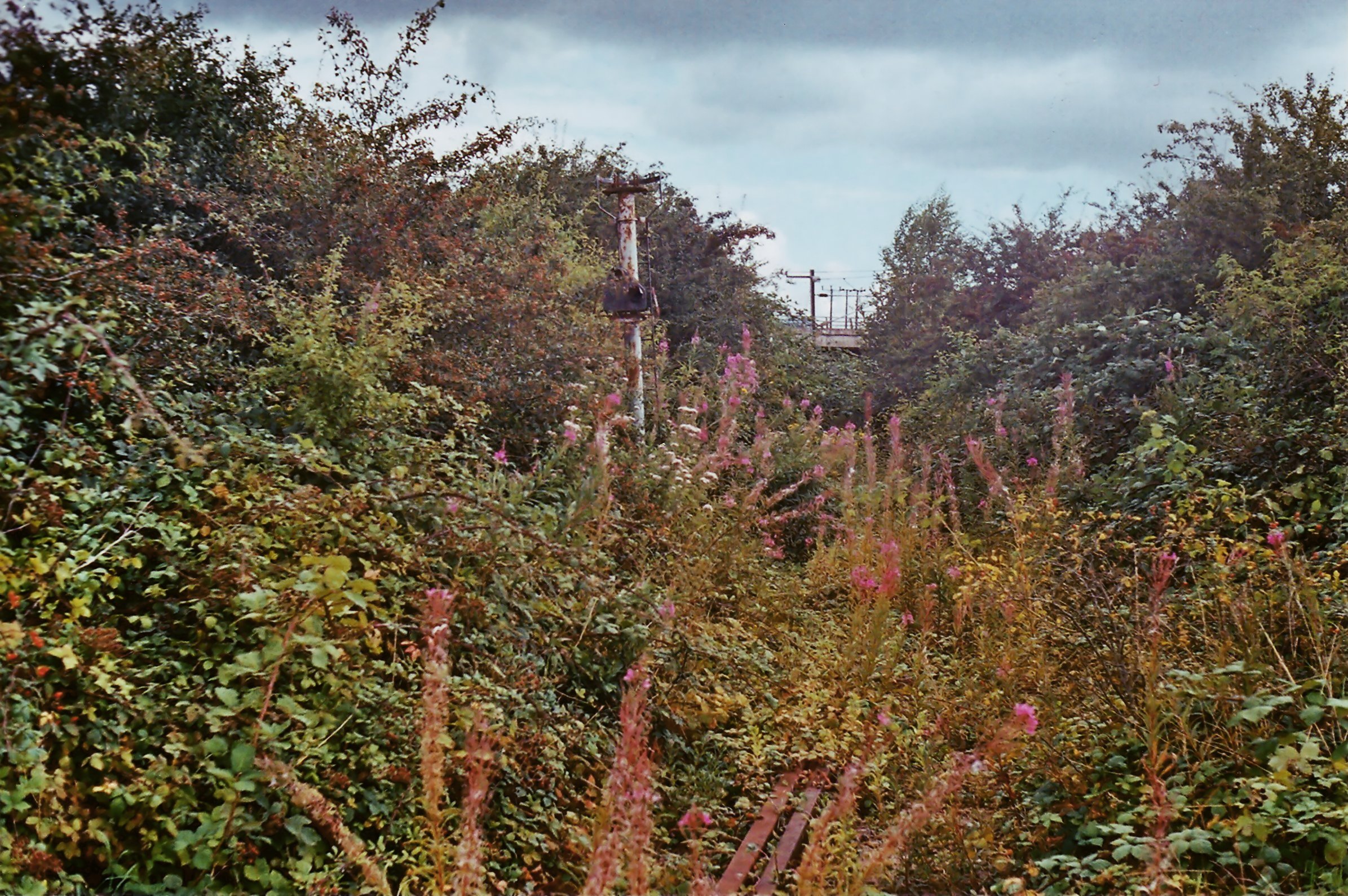
You can see that a shunt signal was present back then; that’s the somewhat-triangular thing about half a metre from the top.
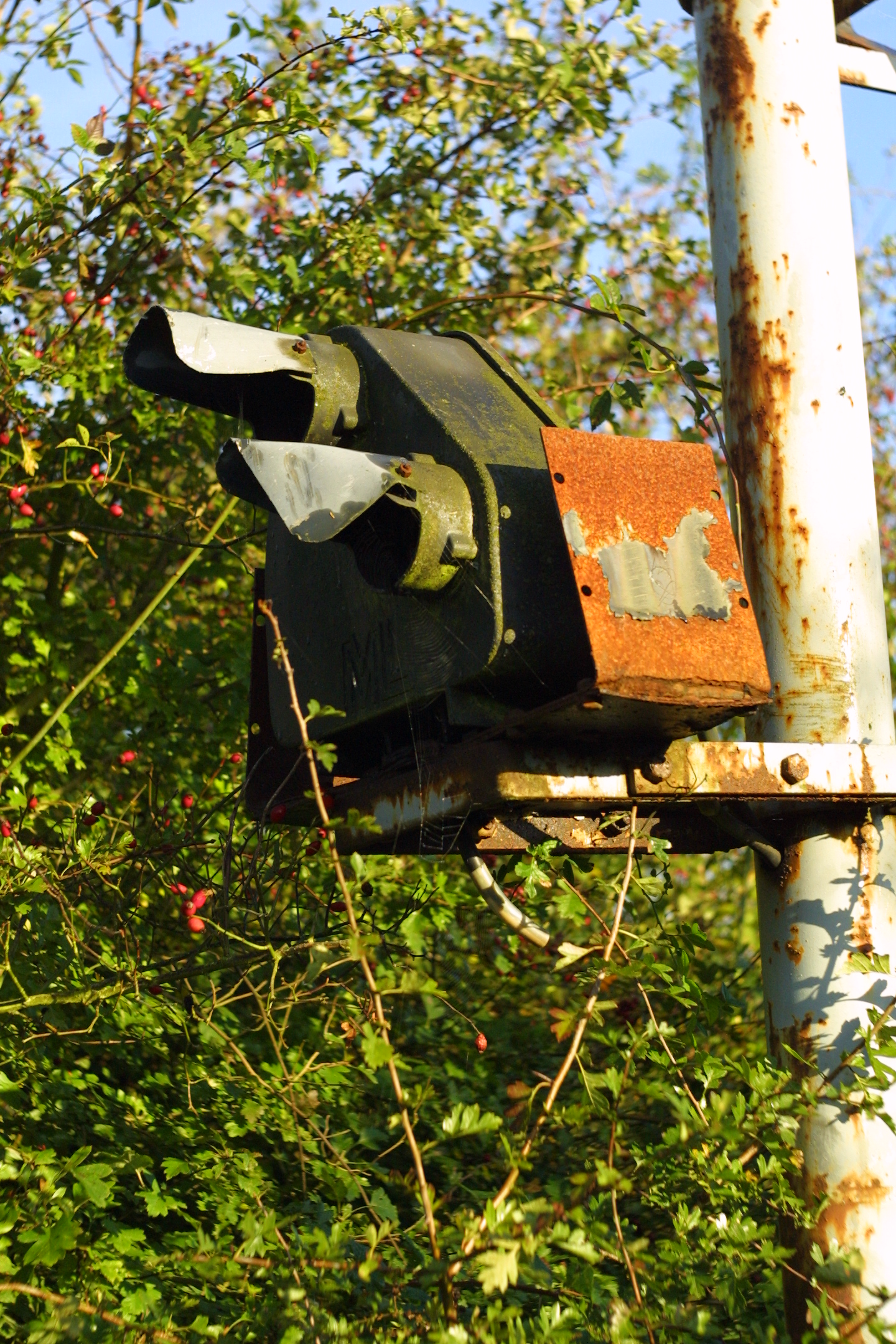
It is unclear where this has gone. We looked in the undergrowth during our 2023 visit and found nothing. We found a lot else, but I’ll get to that later. The bracket where the shunt signal was attached is still present, as you can see towards the bottom of the picture below.
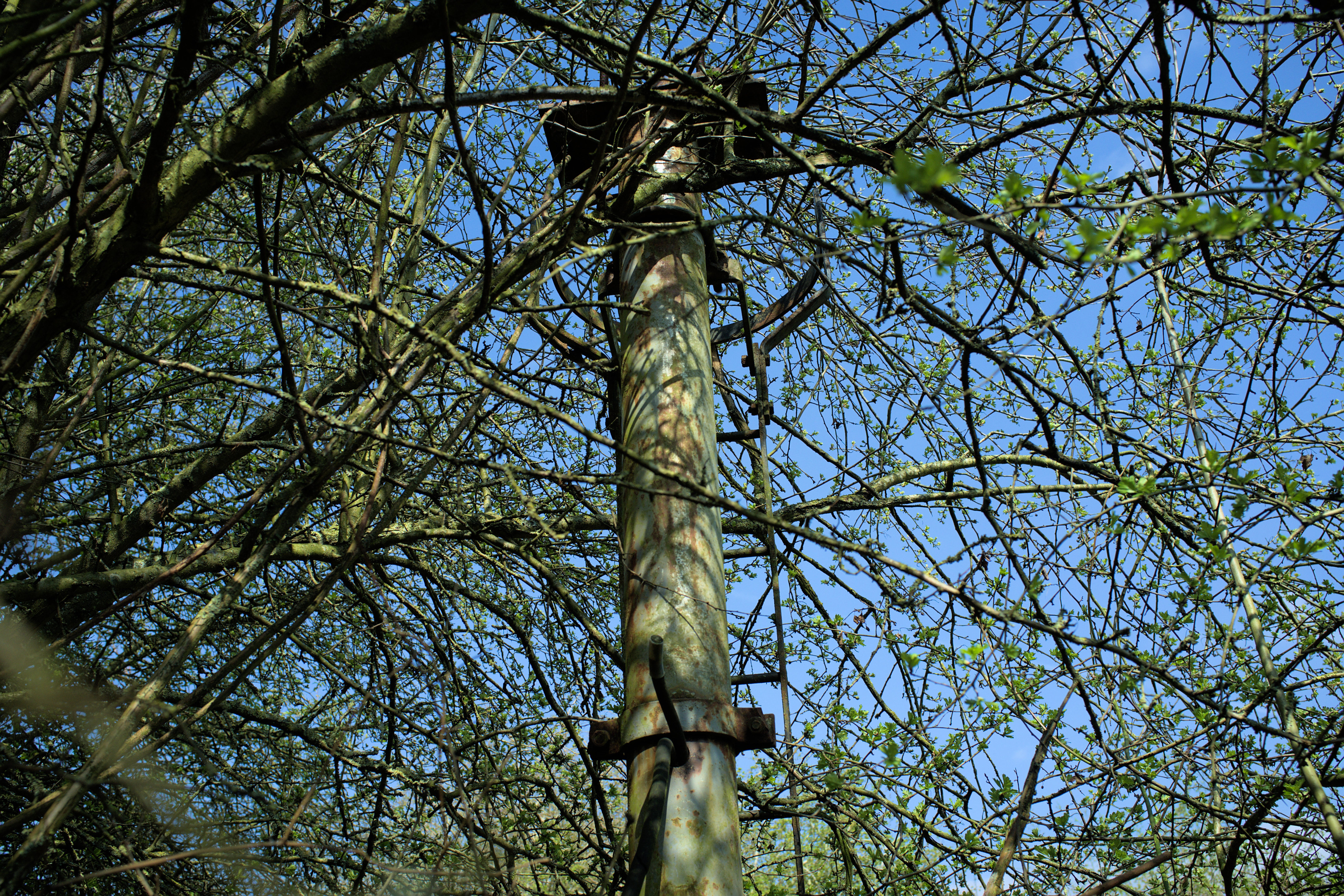
The shunt signal controlled movements on to the stub (as it would have been when this signal was in use) of the Harbour Branch. The main colour light signal that would have been above it would have controlled movements on to the main Fen Line.
The signal’s ladder is still intact. Though it is made of solid steel – with half-inch-thick rods for rungs and quarter-inch-thick sides – I did not much feel like testing the welding skills of whoever made this in the 1980s by climbing it, if only because this would be a terribly inconvenient location to acquire a head injury.
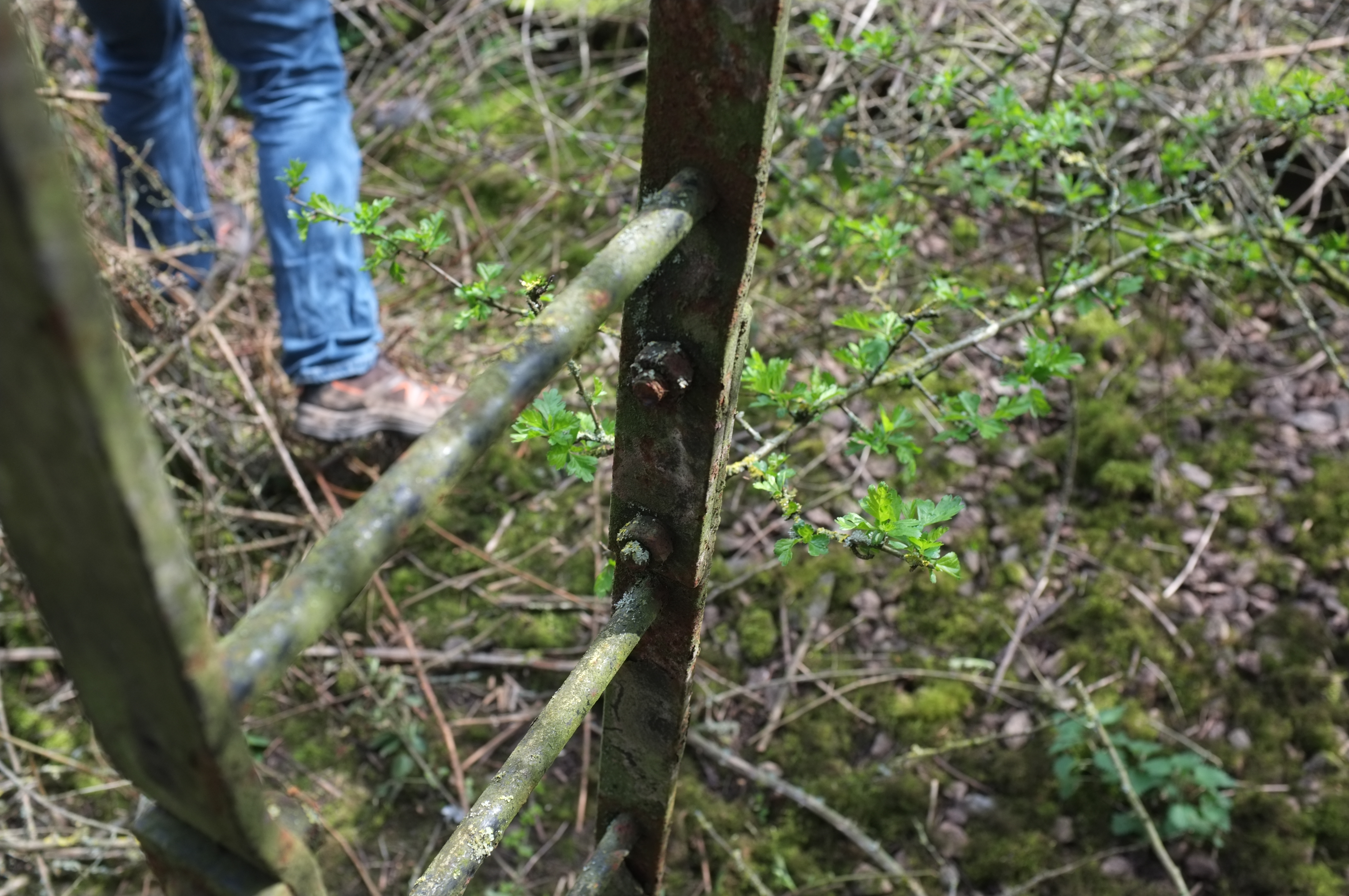
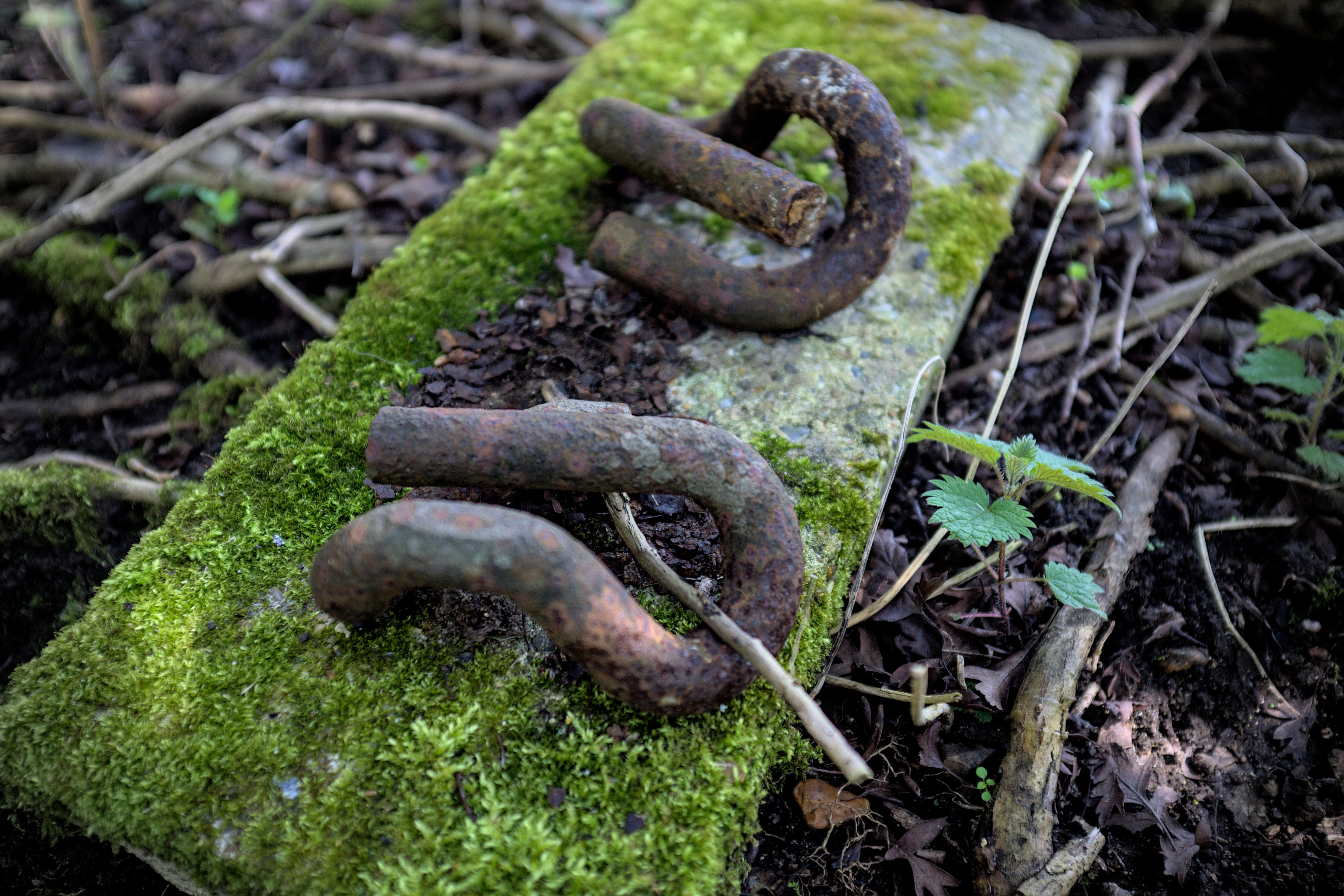
At one point this signal would have had a colour light bolted to the top. That, too, has long disappeared. But in the undergrowth nearby – as I said, there’s lots in there – is this solid bracket, which is suspiciously like a bracket to adapt a colour light signal to a signal post.
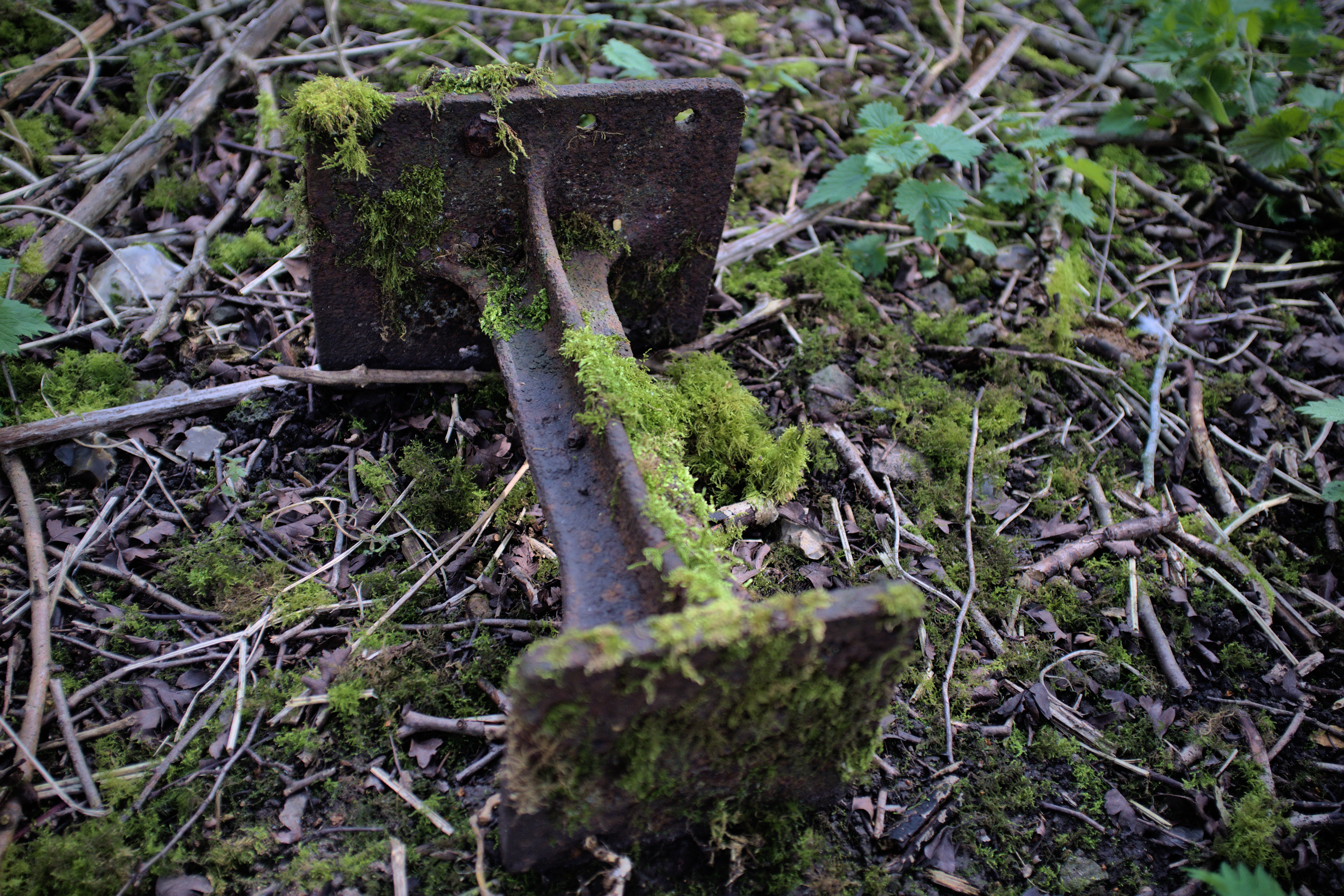
Should I get around to visiting this place again, and everything is still present and accessible, I shall bring a ruler, brave the totally-safe ladder, and measure the bolt spacing on both the signal post and this bracket to see if they match.
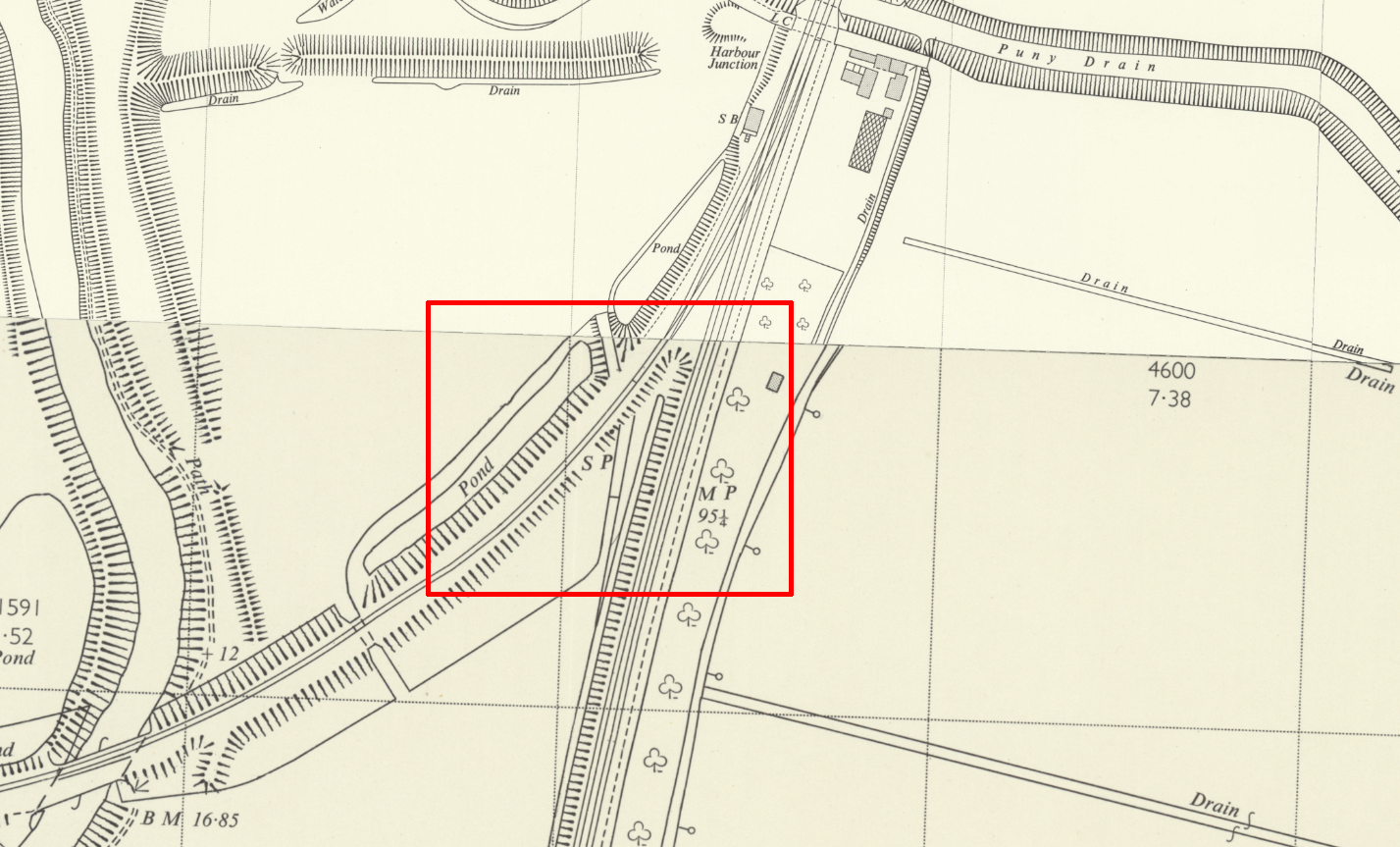
Anyway, let’s do some history of signals at this location. Back when this was a well-used line with two tracks, there were two semaphore signals, one each side of the line. In fact, the red box in the photo shows “S.P.s” at the location of KL38, and one just a short distance west, so that might mean three; it is unclear.
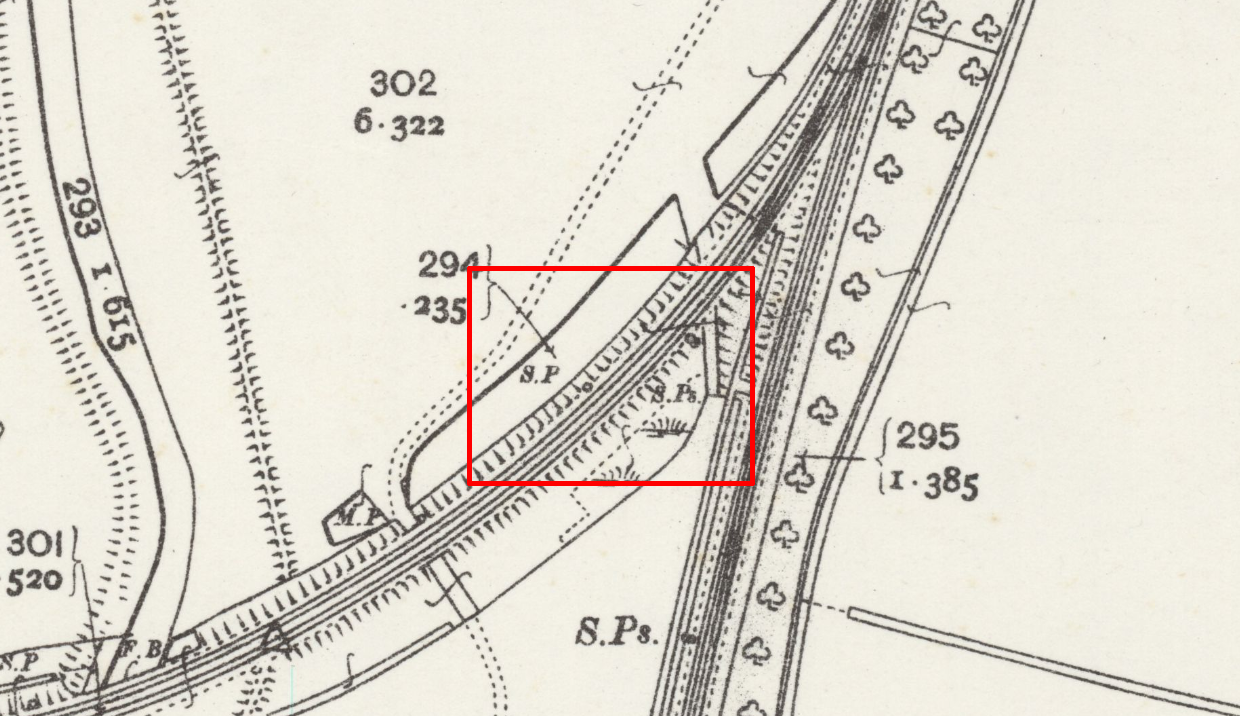
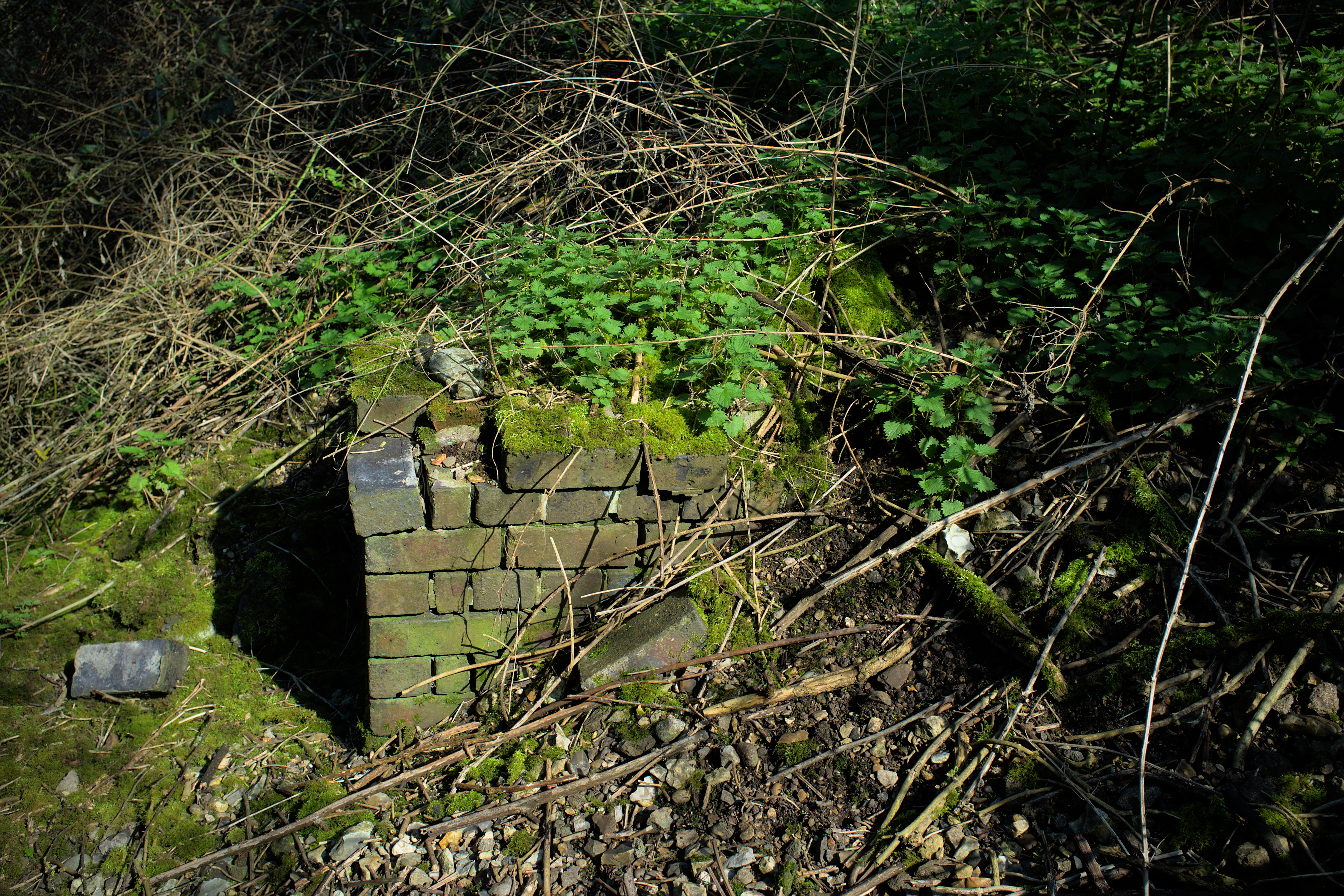
The one further west – towards the left of the red rectangle I have drawn on the map – might in fact be what this small construction would have held in the past. I don’t see a plausible explanation for what else this might be. I love the beautiful engineering bricks.
After the closure of South Lynn this section of track was reduced to a short single-track freight spur. It didn’t need bi-directional signalling, so the signal post on the north side of the track was removed.
That signal was replaced by KL38, our colour light signal. That happened with the abolishment of Harbour Junction signal box, completed in 1984; replacing it with a colour light signal permitted this to be controlled from King’s Lynn Junction. Rather astonishingly, the stump of the semaphore signal is present! Norfolk’s Disused Railways took the photo below; for some reason I didn’t think to do that despite it being pointed out to me at the time.
Near to KL38 are some trap points.
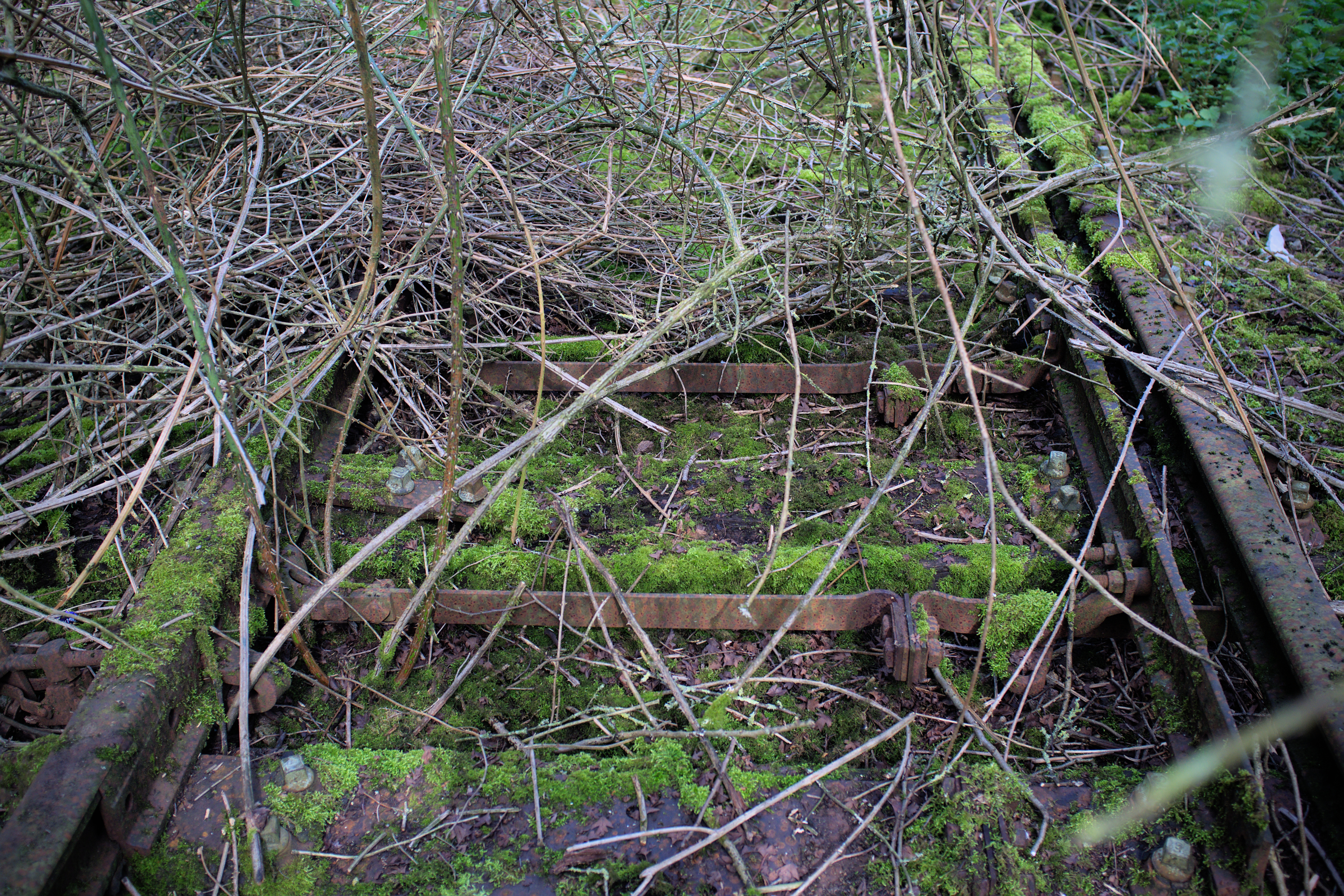
At which point we must take a brief, excessively simplified digression into what “trap points” are; those who already know will probably skip to the next photo, and if they do not, they will find something to nitpick in my description for a general audience. Trap points function just like the kind of points that allow trains to move from one track to the other, but instead they serve to move a train from a track into nothing, i.e. literally send it off the rails. A signal would be interlocked with it; if that signal was not showing an aspect permitting a train to proceed, the points would point at nothing and derail the train.
If that sounds insane and also a little exciting, you are not a railway nerd, and that is OK. But you’ll often find these in the vicinity of freight yards. Runaway freight wagons were not an imaginary hazard! If one got away, you wouldn’t want it rolling somewhere that it could do harm to other trains and the people on them. So this is a safety mechanism to protect the nearby main line.
And often, freight yards were outside of British Rail authority, using their own locomotives and their own operational standards. Usually looser ones; see “runaway freight wagons”, above. For obvious reasons a freight yard must be connected to the line, but those operations must be kept strictly separate. Trap points ensure that they cannot possibly interfere with each other.
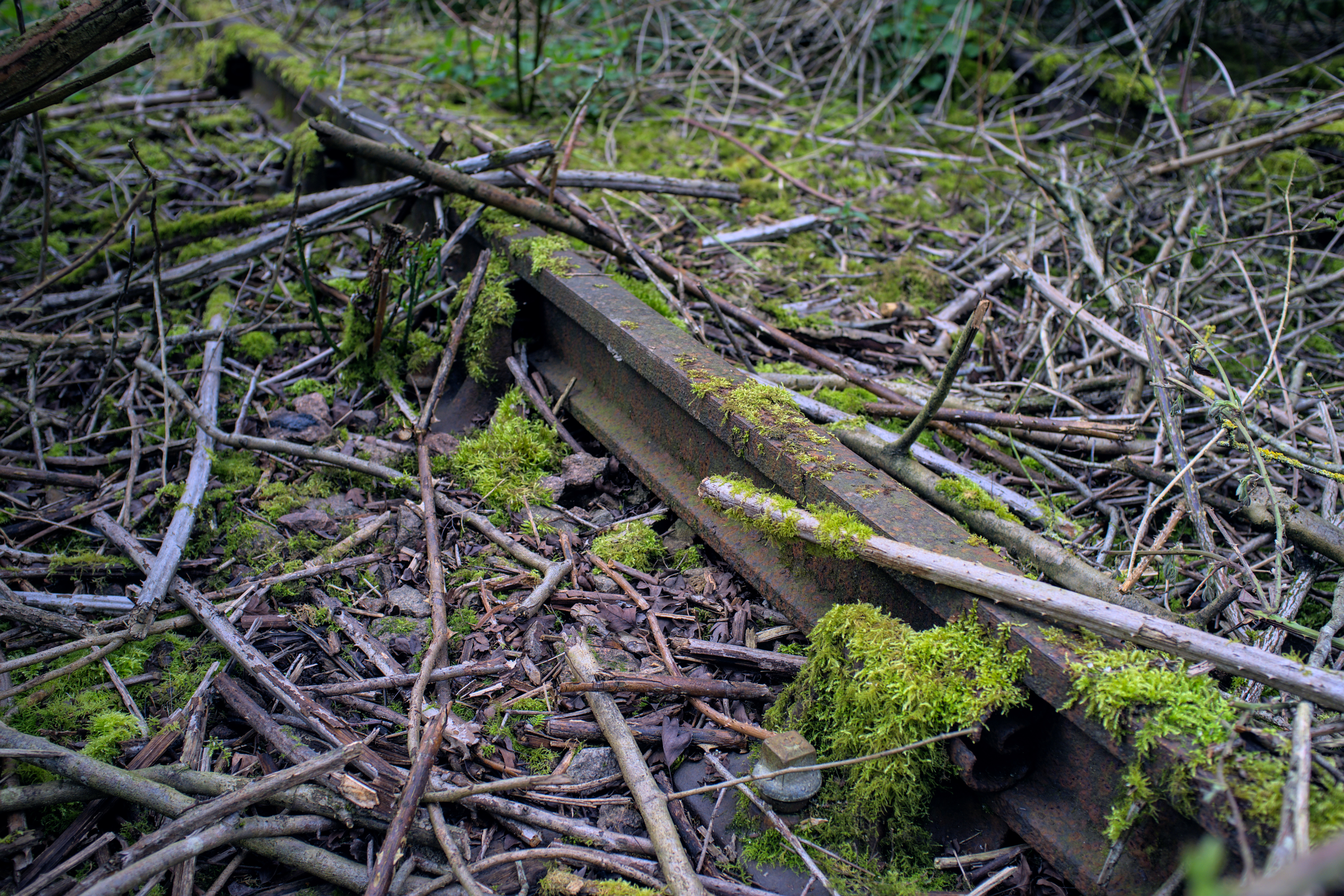
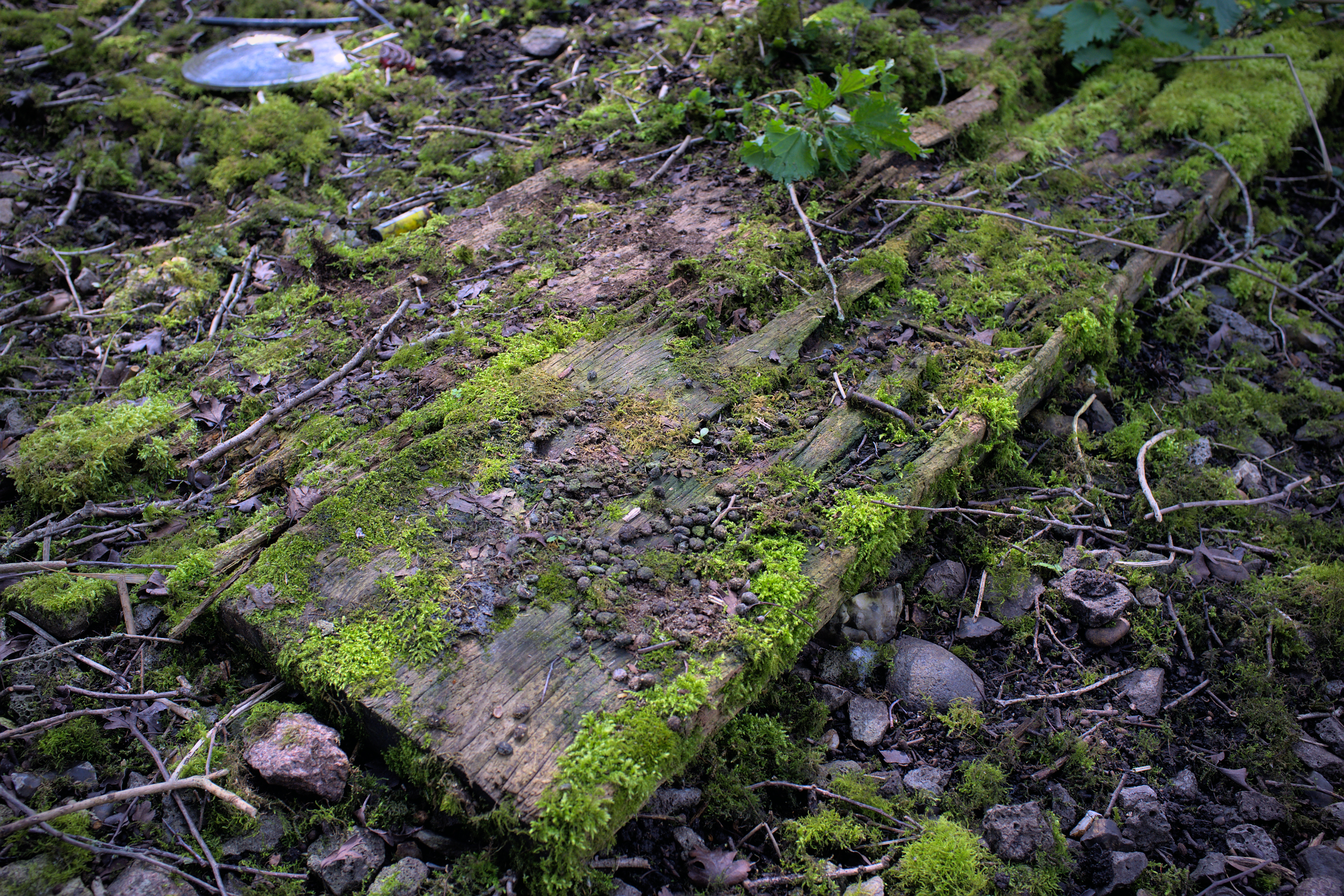
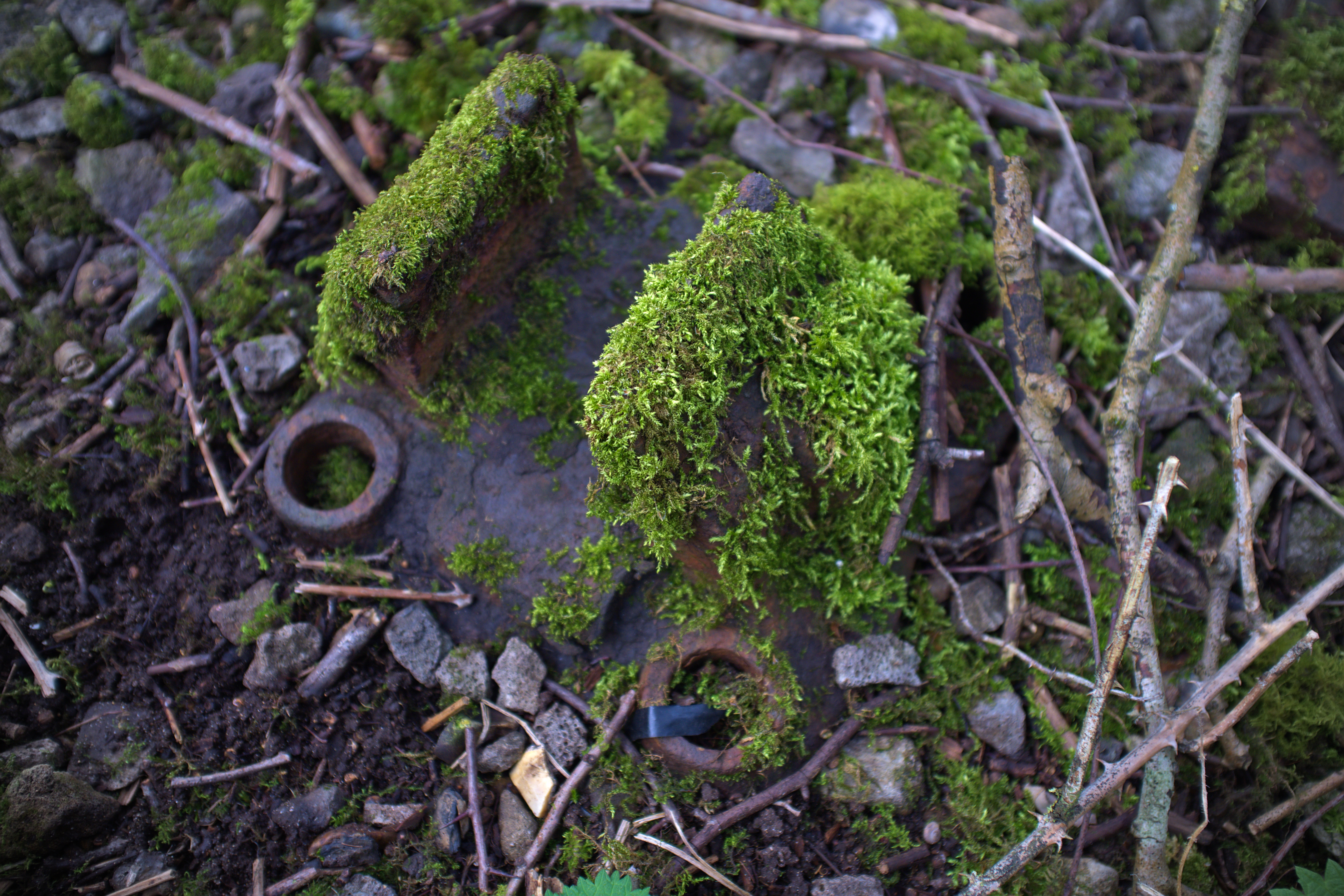
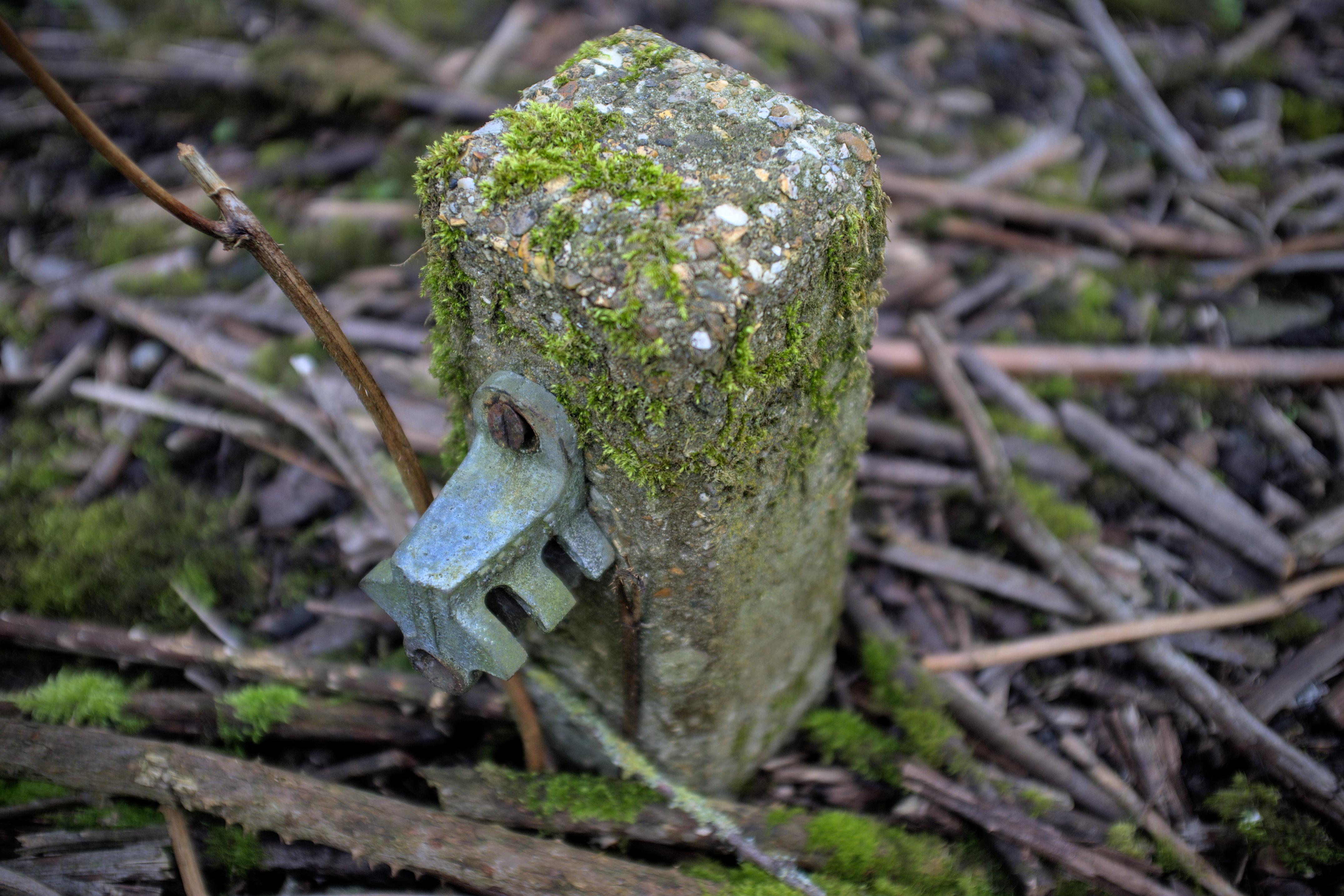
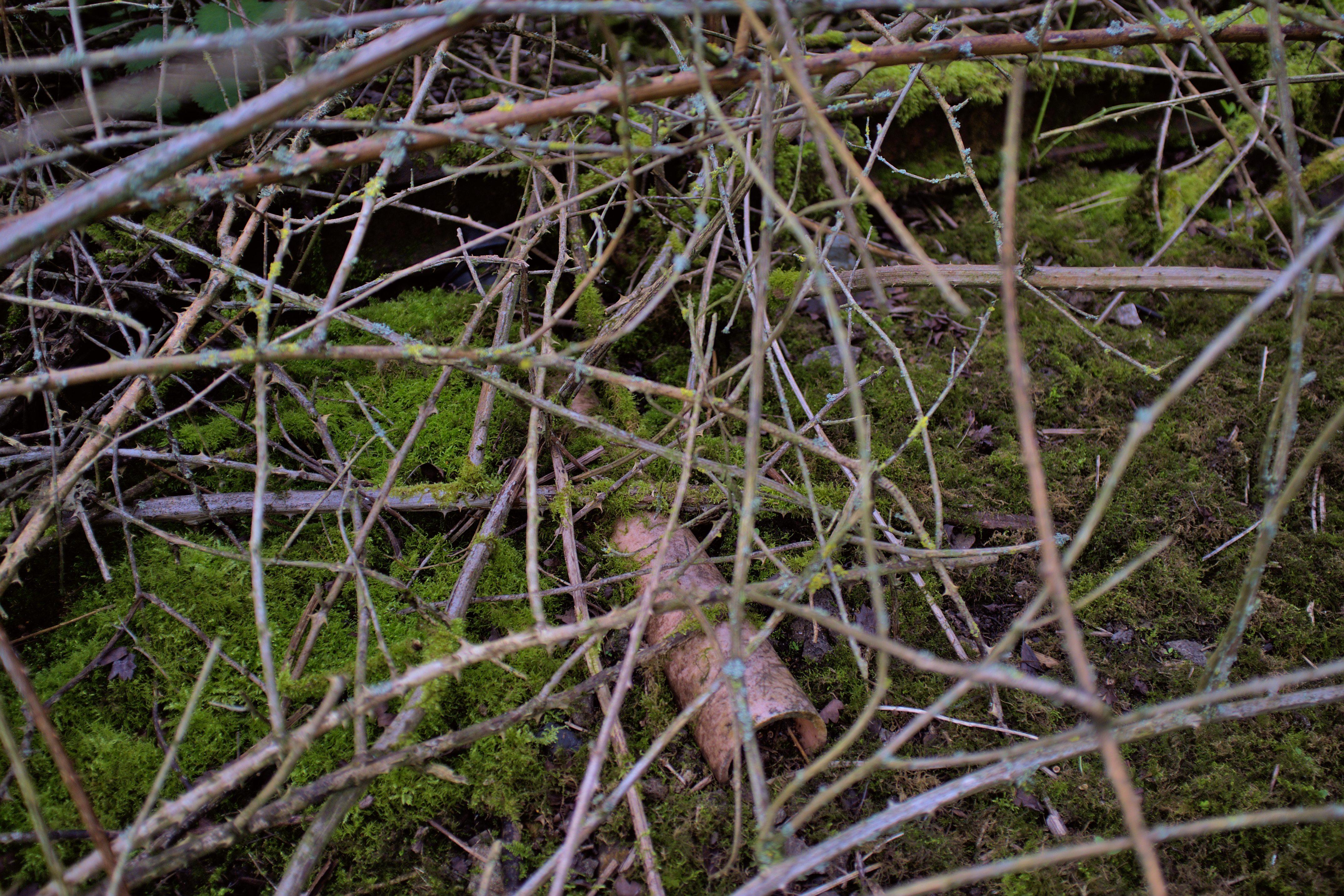
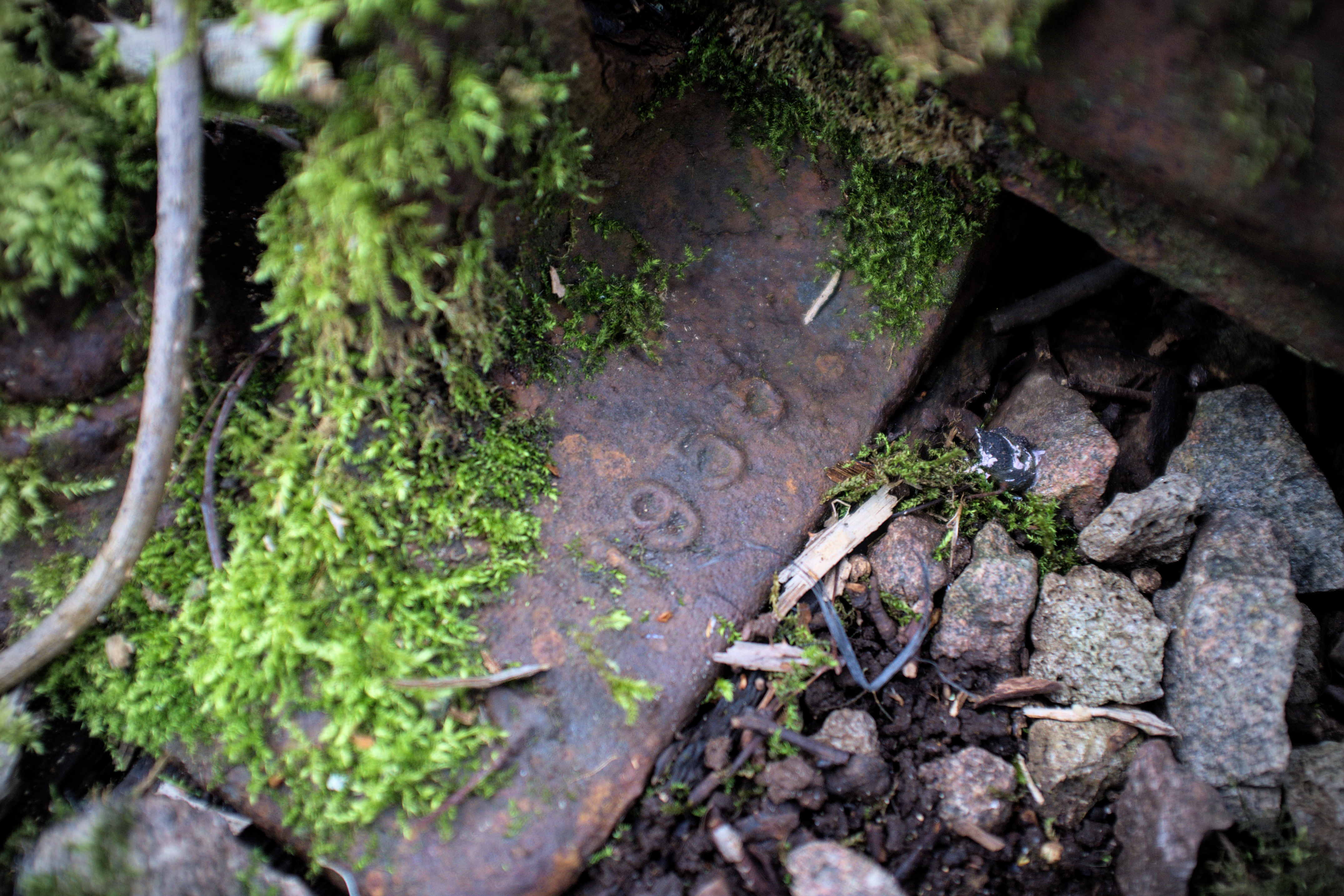
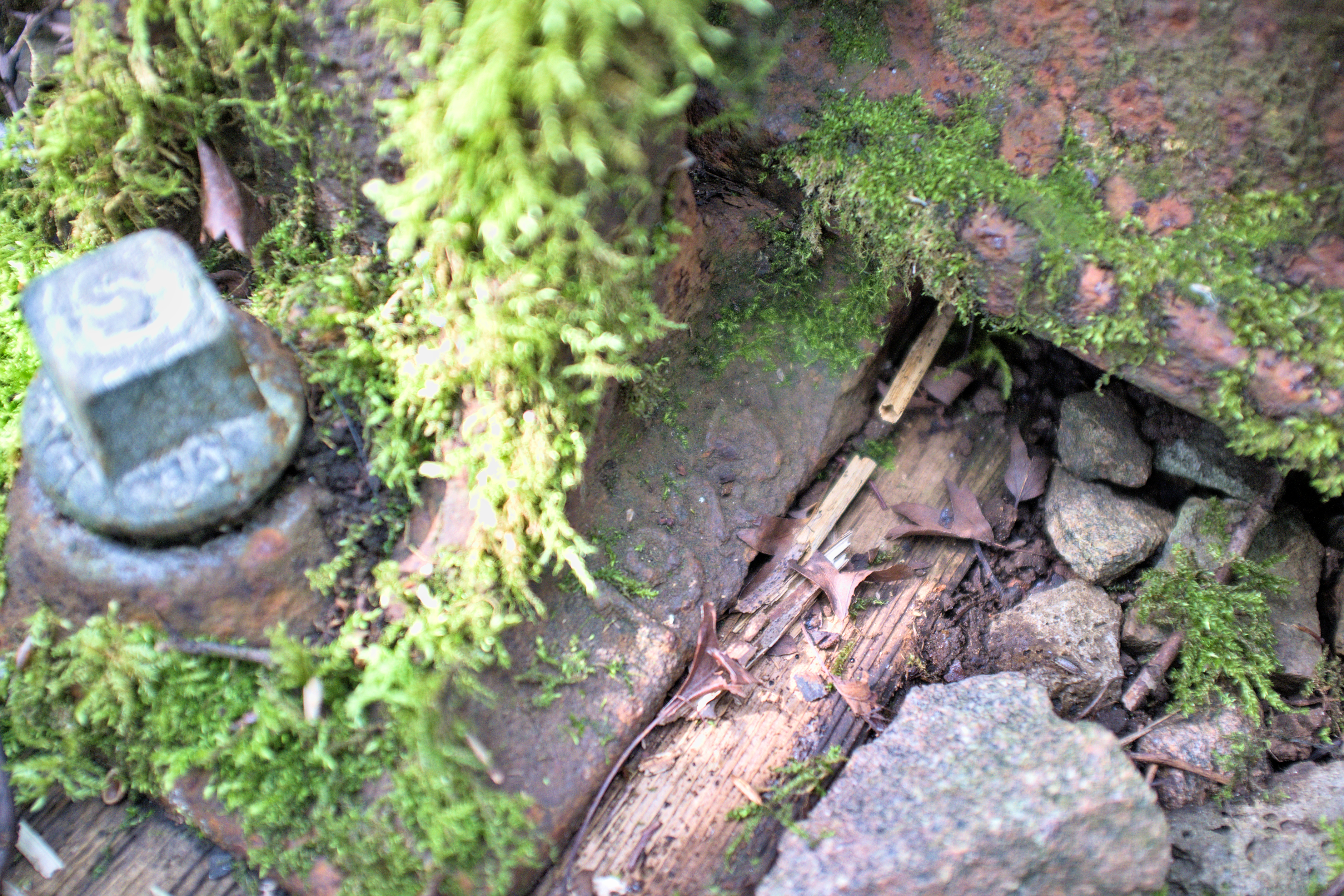
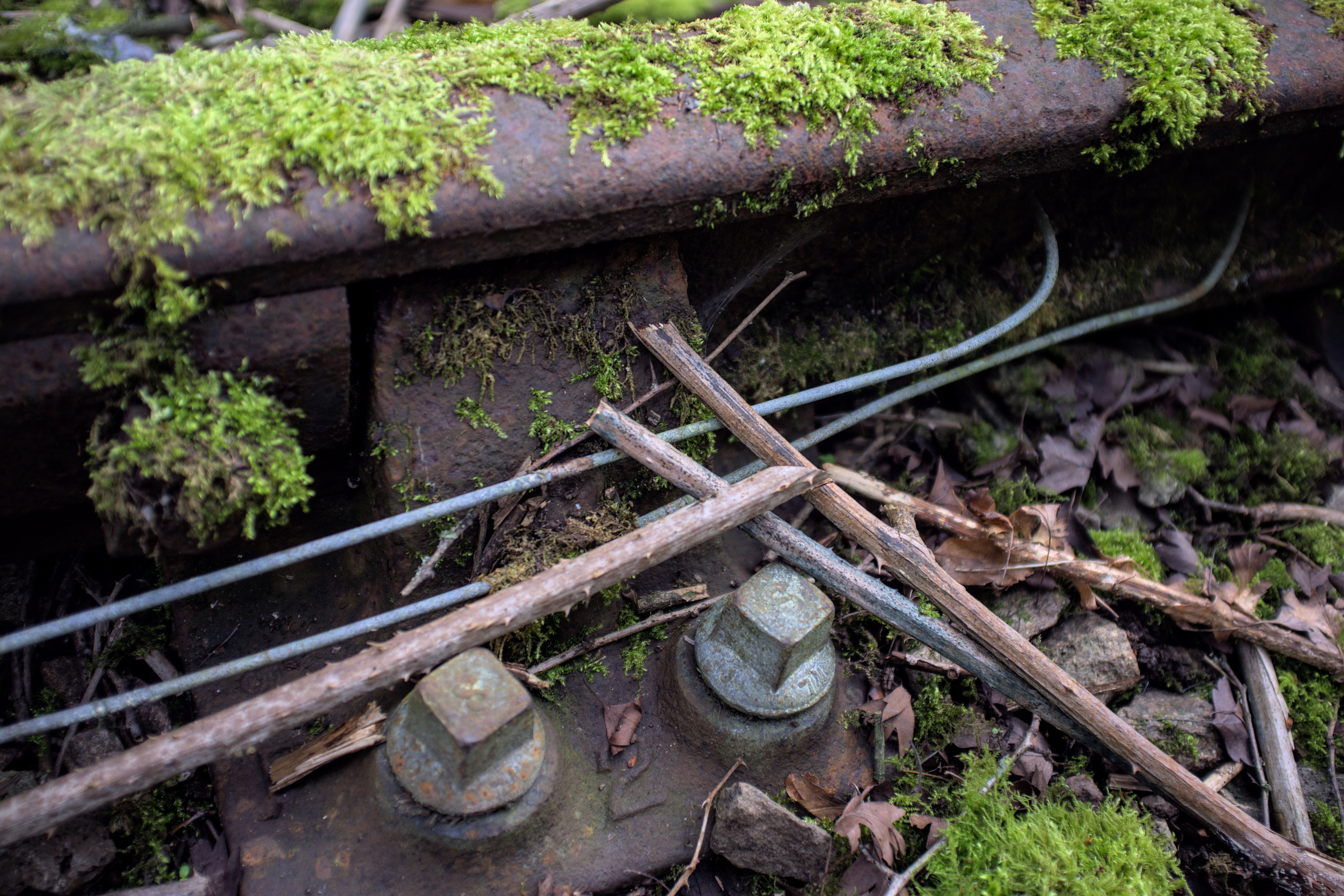
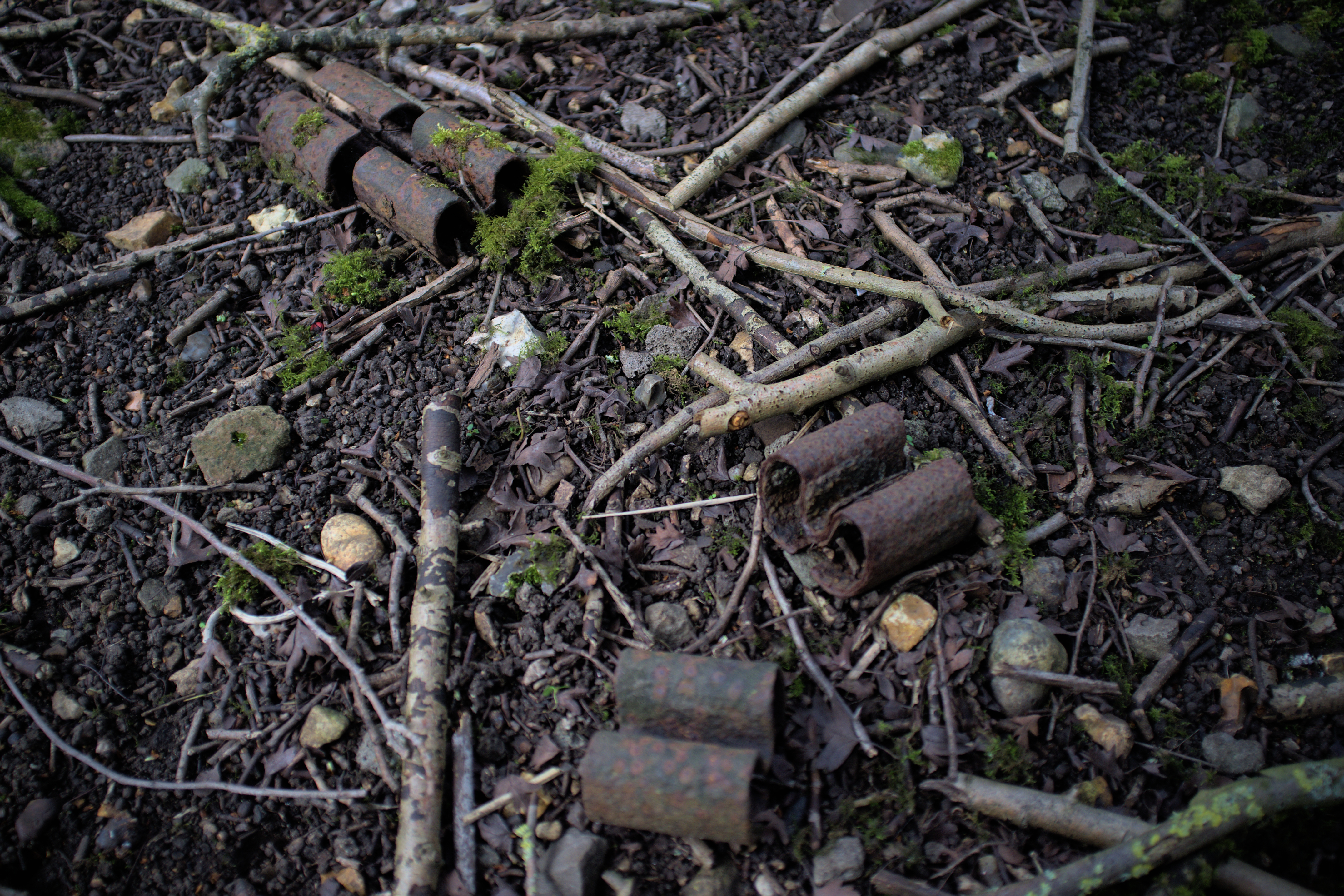
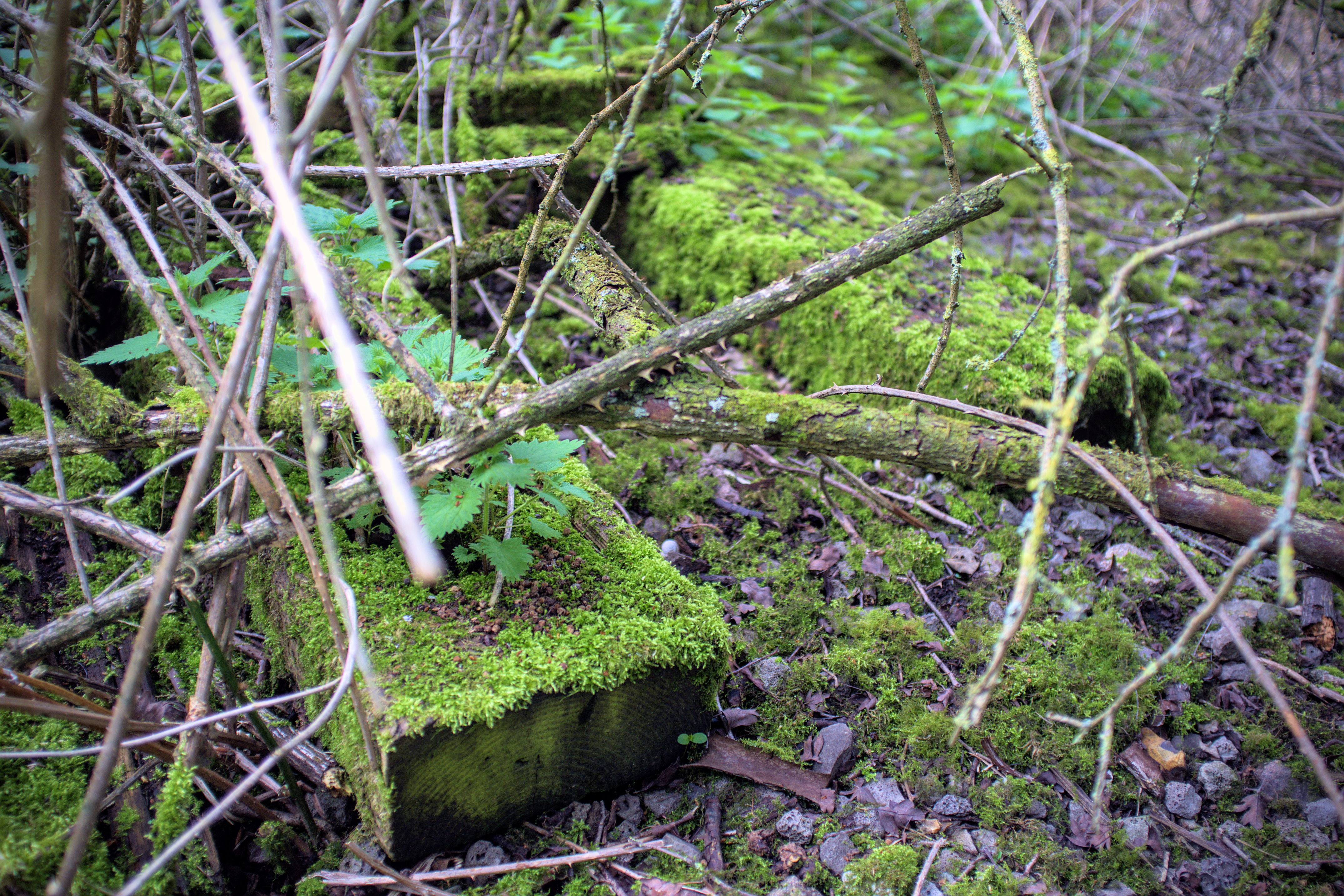
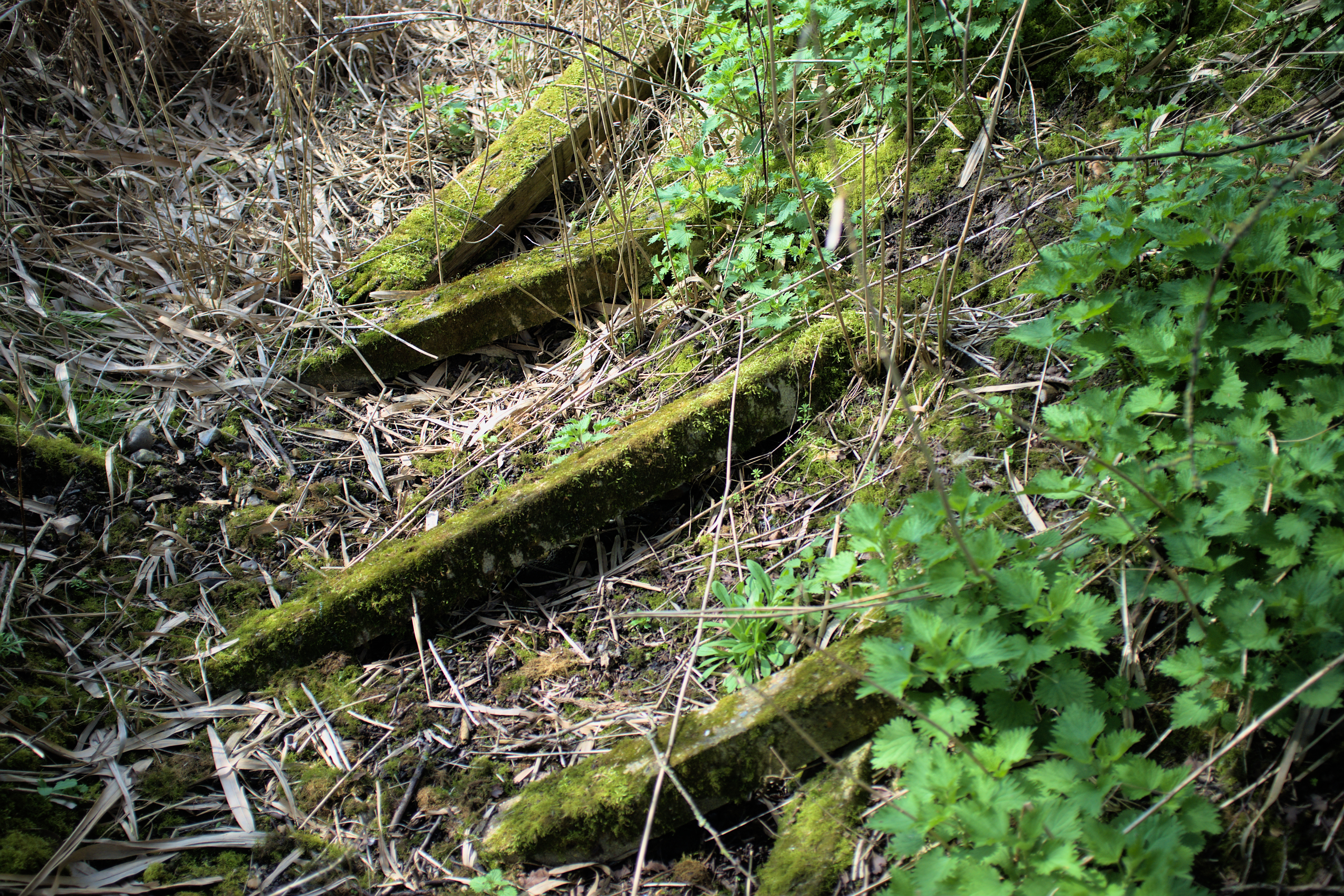
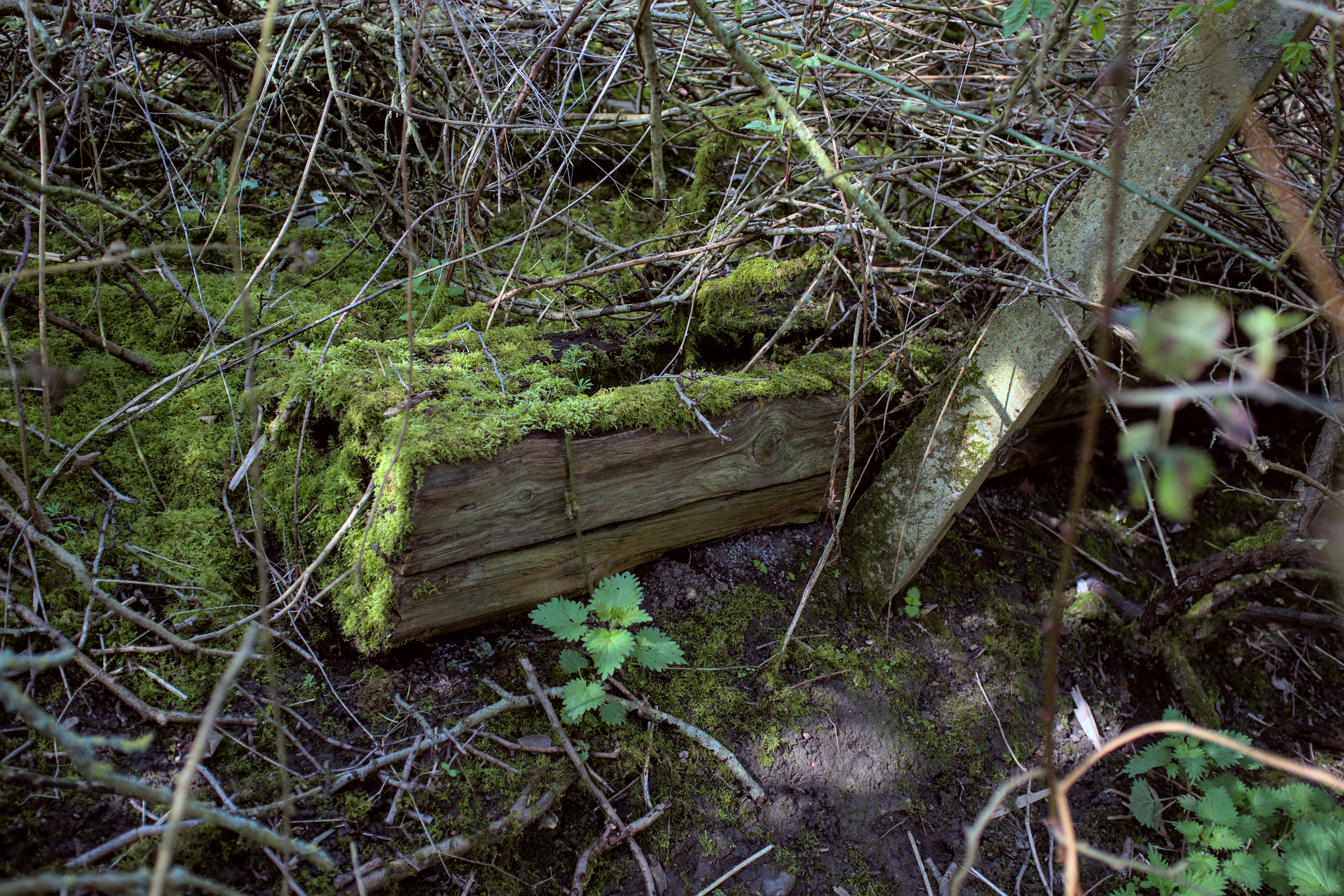
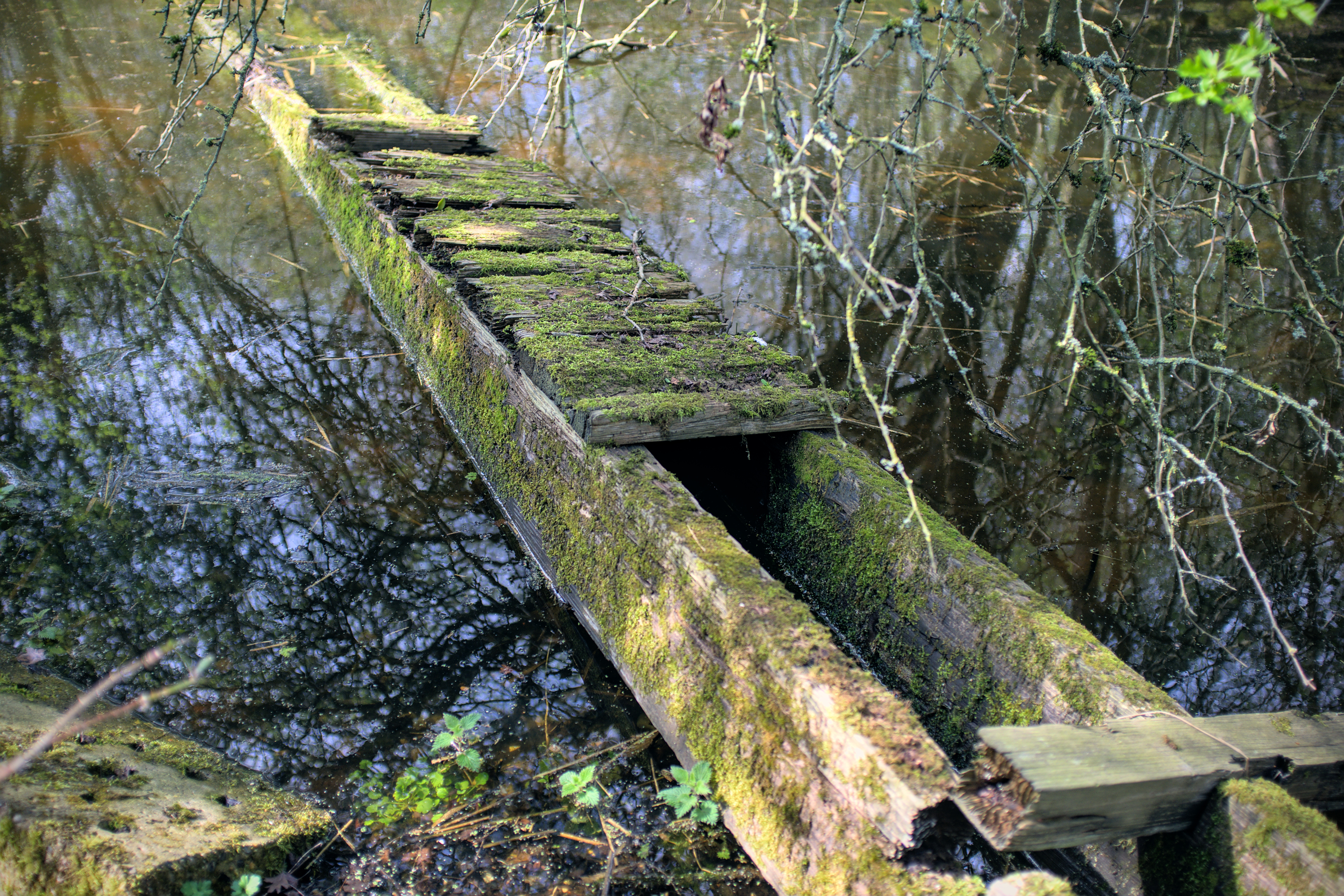
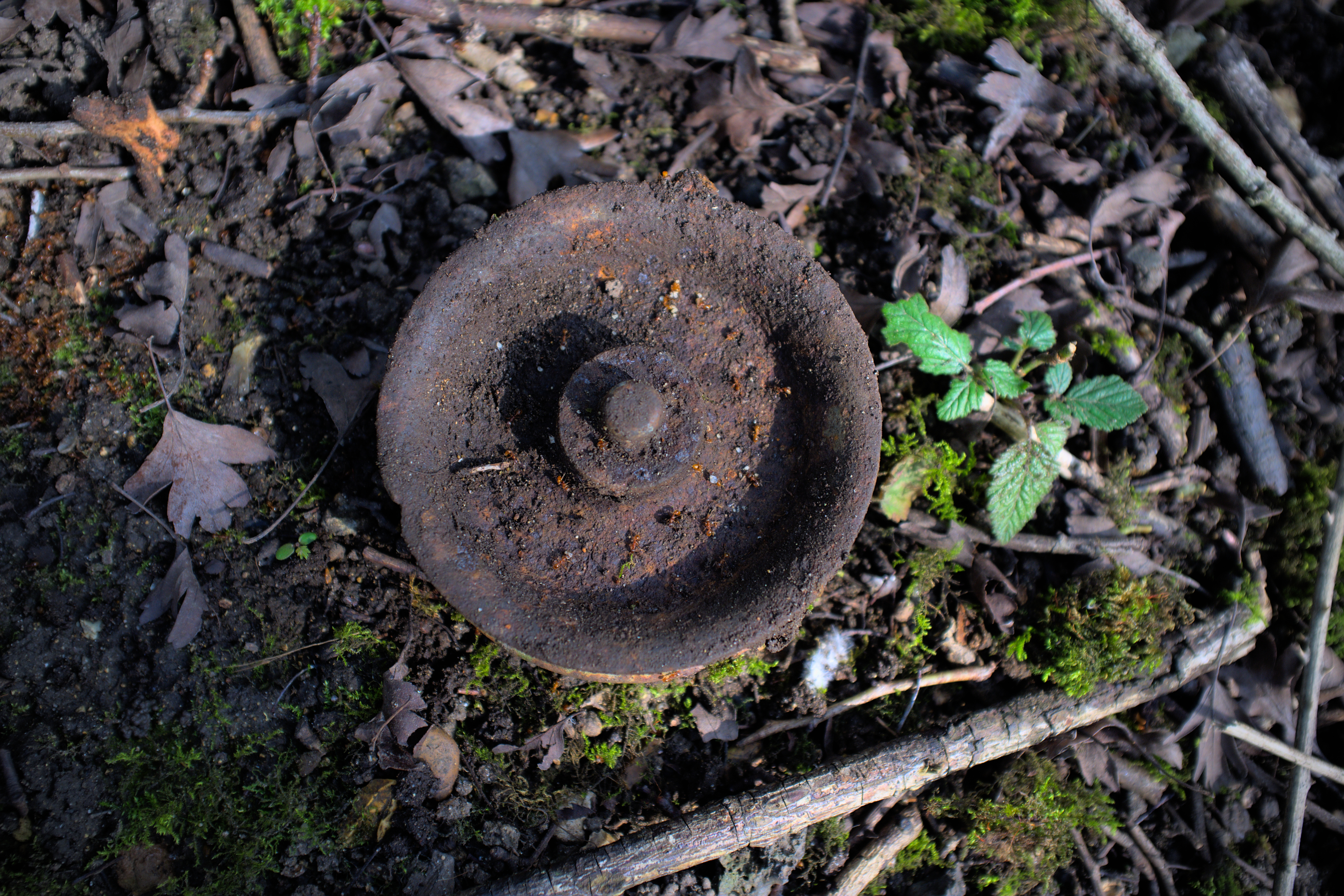
Scattered everywhere are various other bits of railway miscellanea. There are enough of them to be overwhelming! I photographed as much of this as I could; you’ll see them in the gallery at the end.
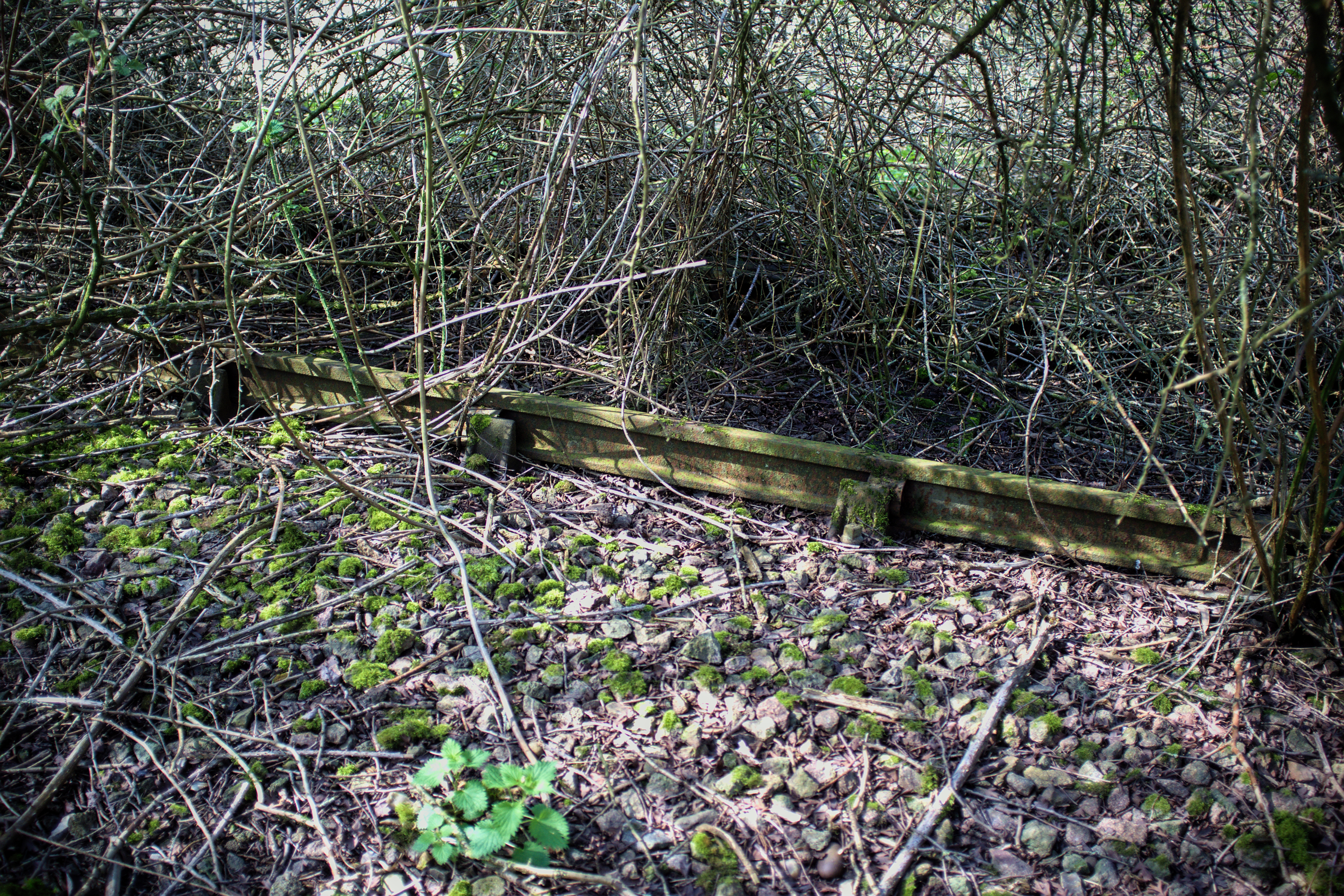
Very nearby, you will find a short section of track, which looks to the untrained eye like it could be part of some points, but is not.
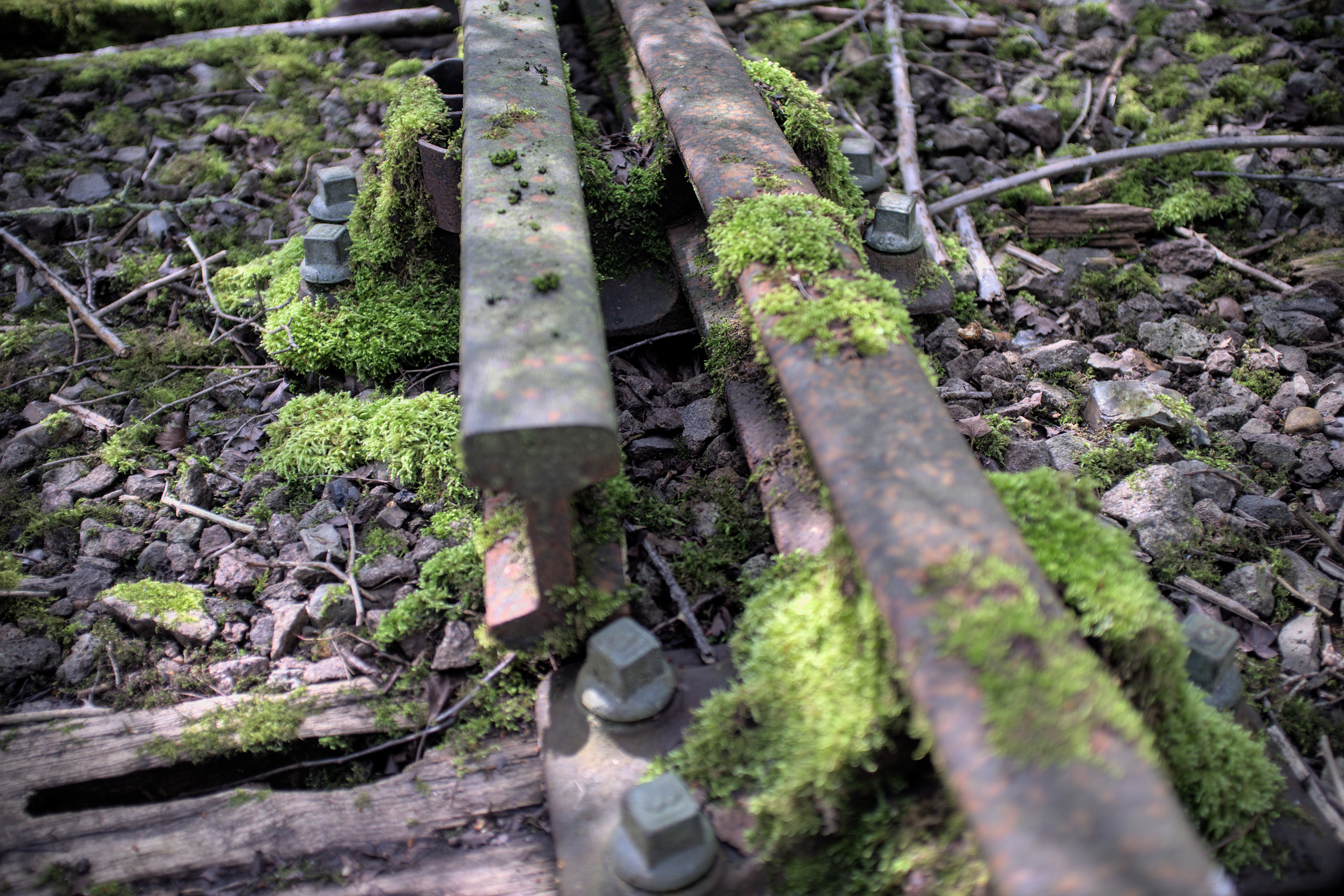
Instead, the third rail here is a check rail. It was used on very tight curves, on the inside (shorter) rail. In this configuration, it is to guard against derailment caused by flange climb; under cornering forces that would ordinarily cause a derailment the extra rail contacts the back of the wheel flanges on one side.
In the right lighting, the remnants of railway track feel slightly magical…
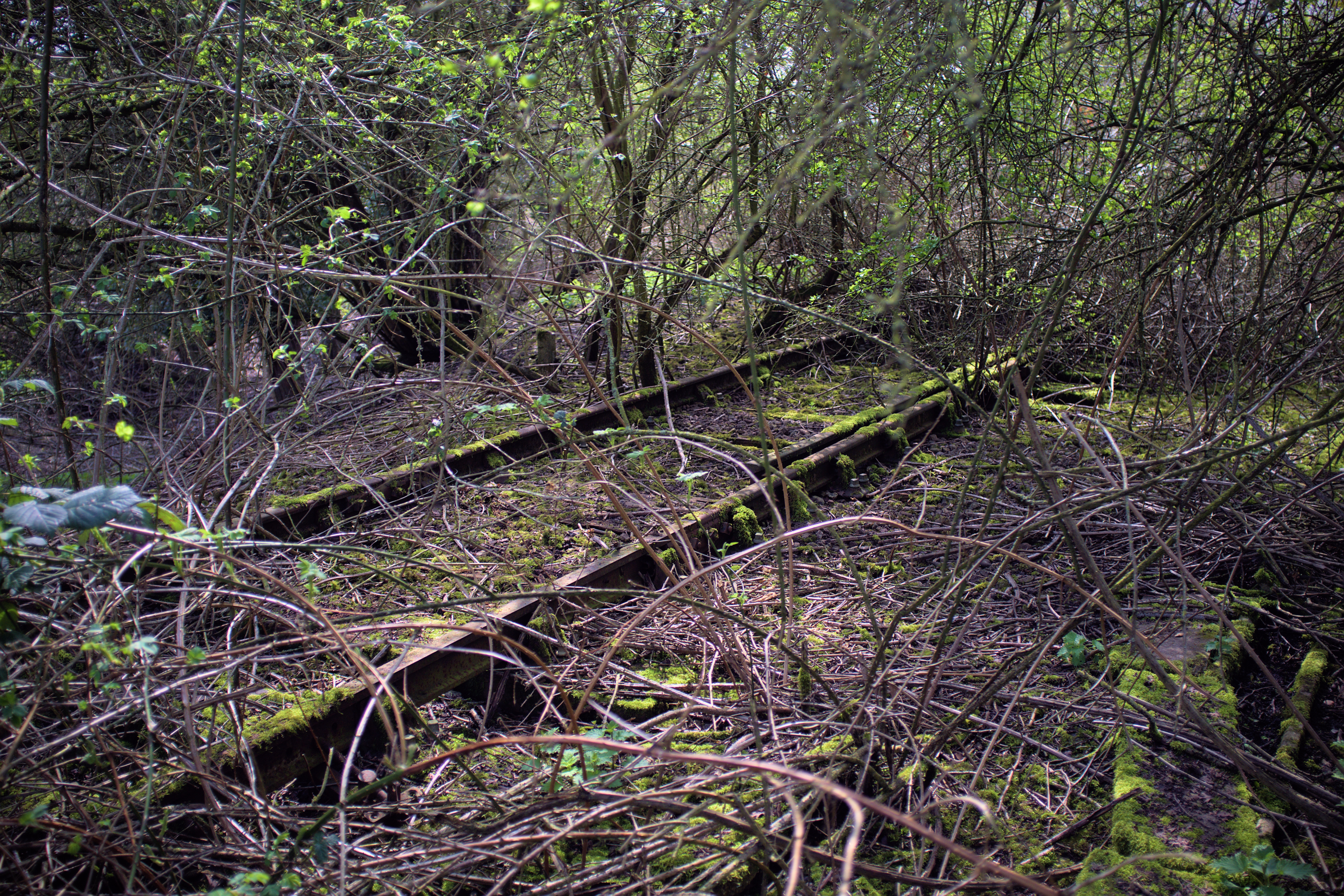
…especially as the moss takes over, reminding us that nature always wins.
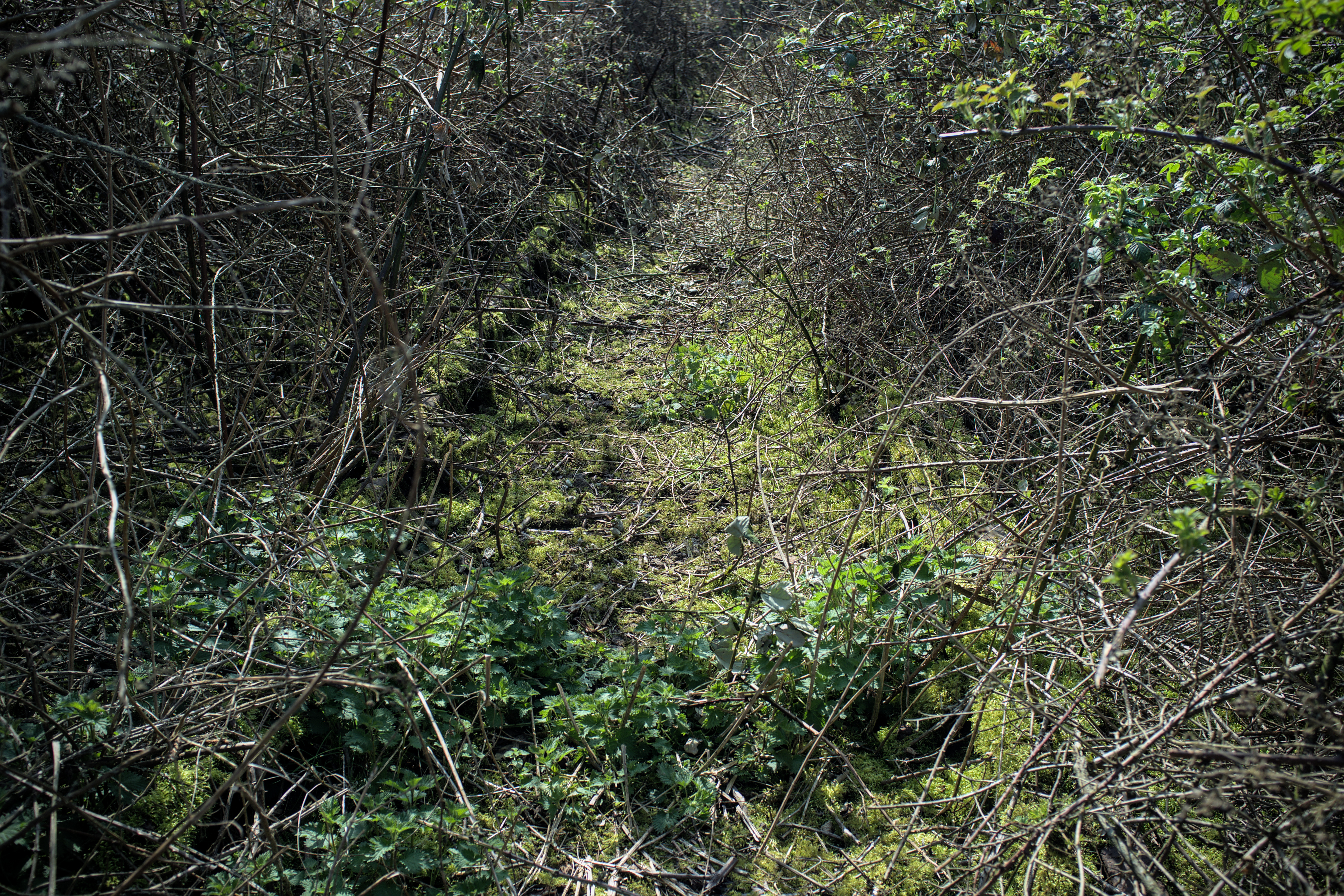
All of this would be a nice find all by itself. But if you pause, as we did on our last visit, and look around, you will find a wealth of little remnants. One that is not so tiny is a brick building, which was a small lineside hut.
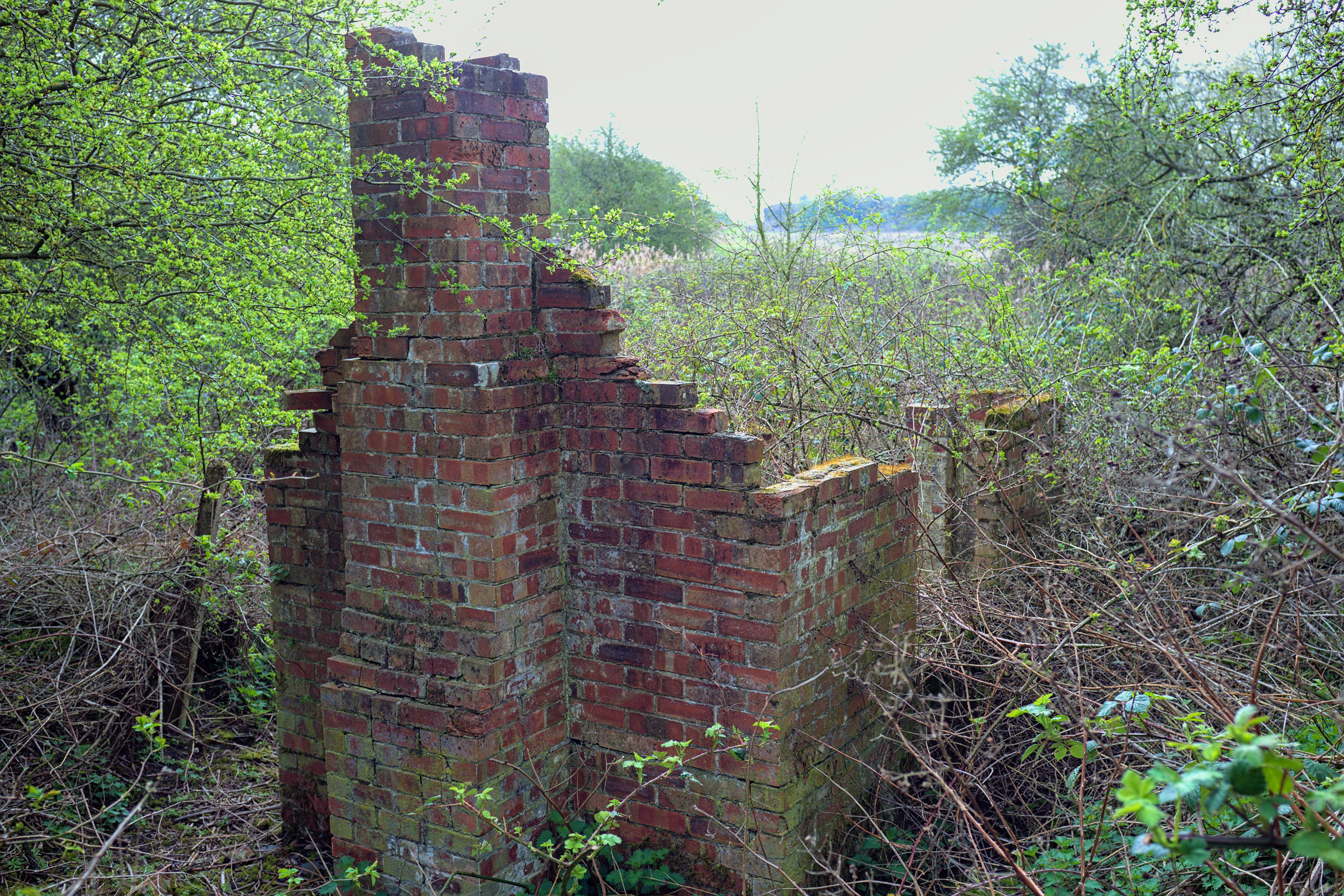
I discuss lineside huts in more detail than I needed to elsewhere; this one, however, has the notable presence of a chimney for a fireplace. How nice!
OK, that’s not such a little remnant. How about the head of a telegraph pole?
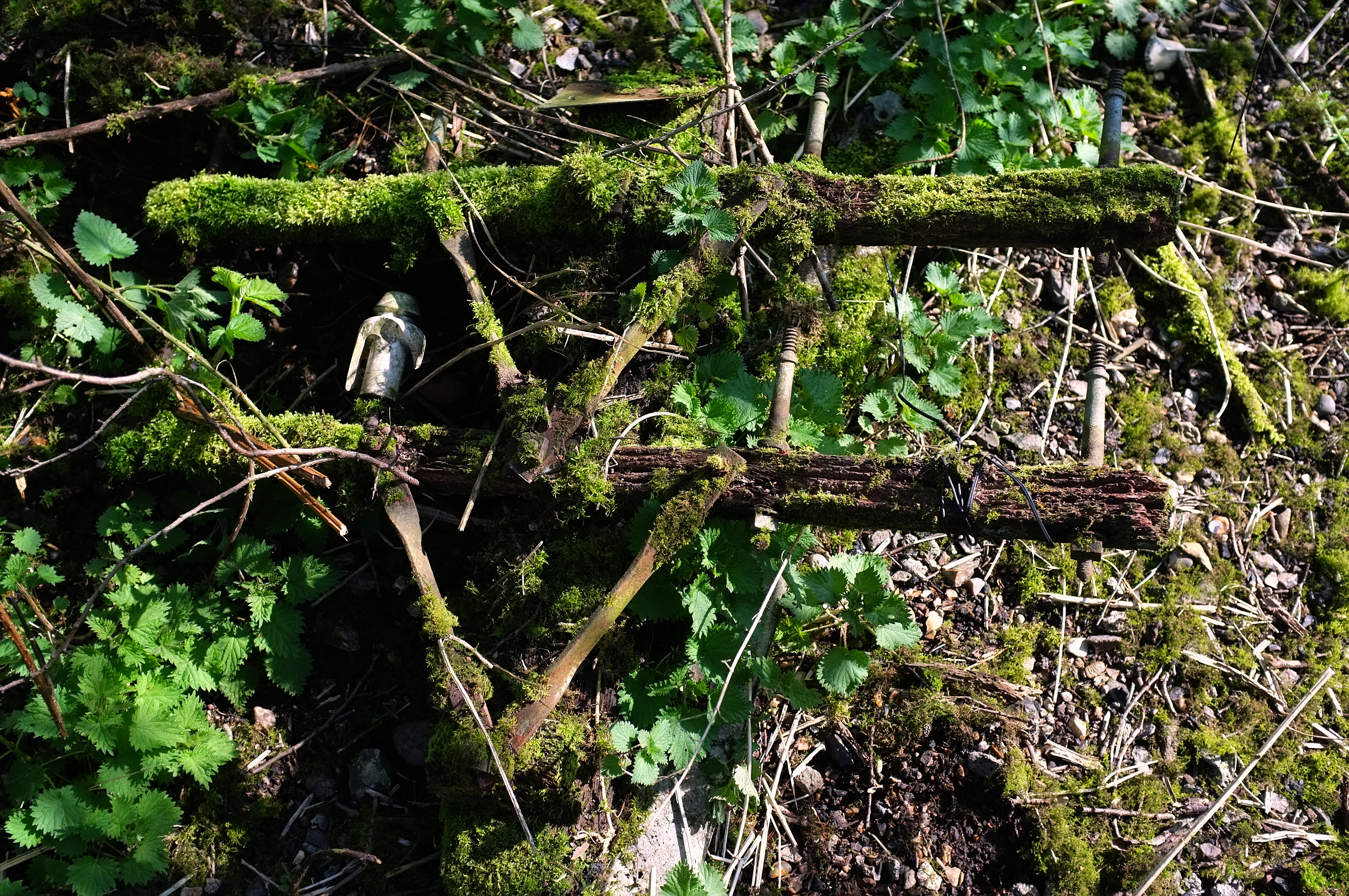
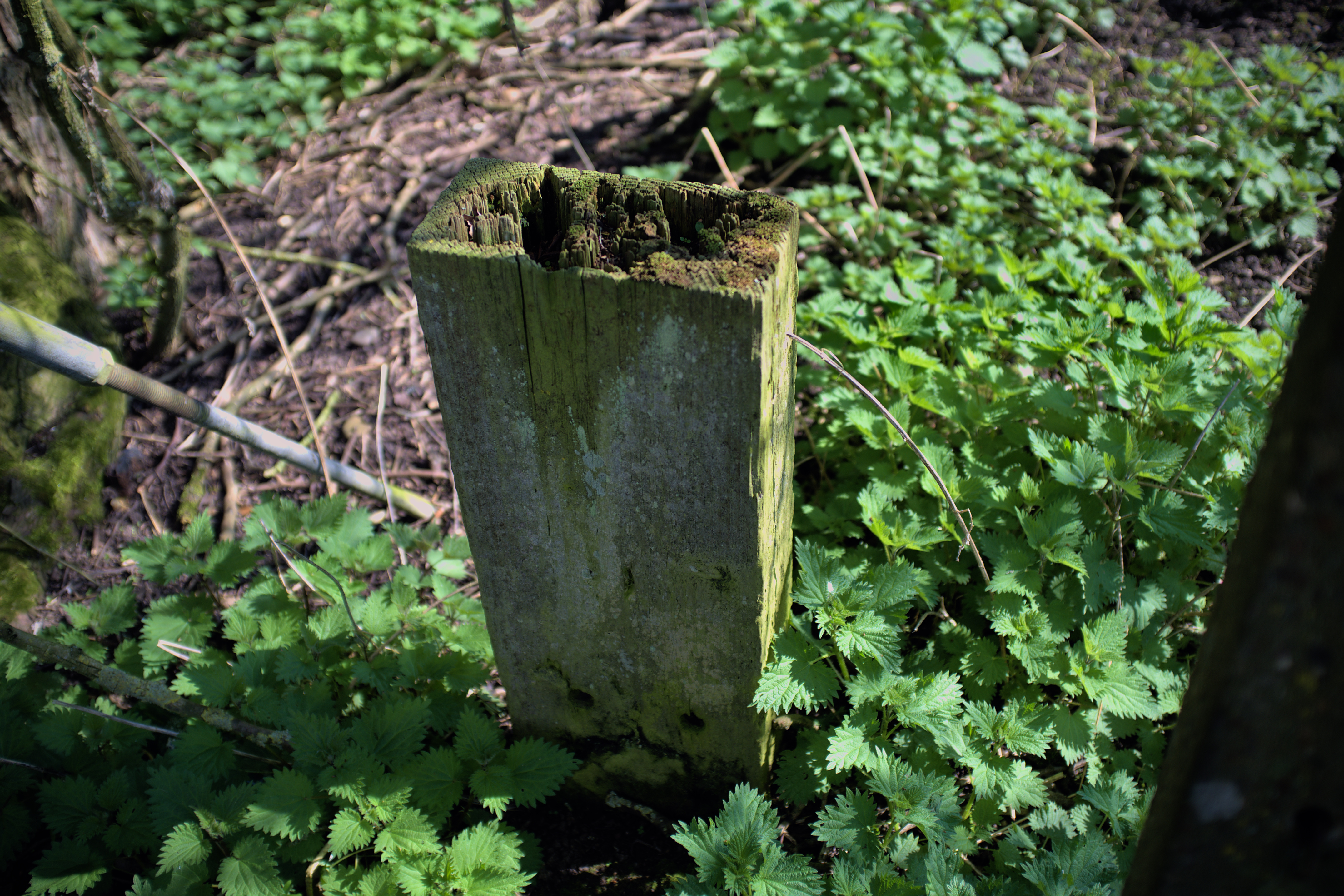
Or this nice layout of fence posts, clearly delineating a footway next to the track?
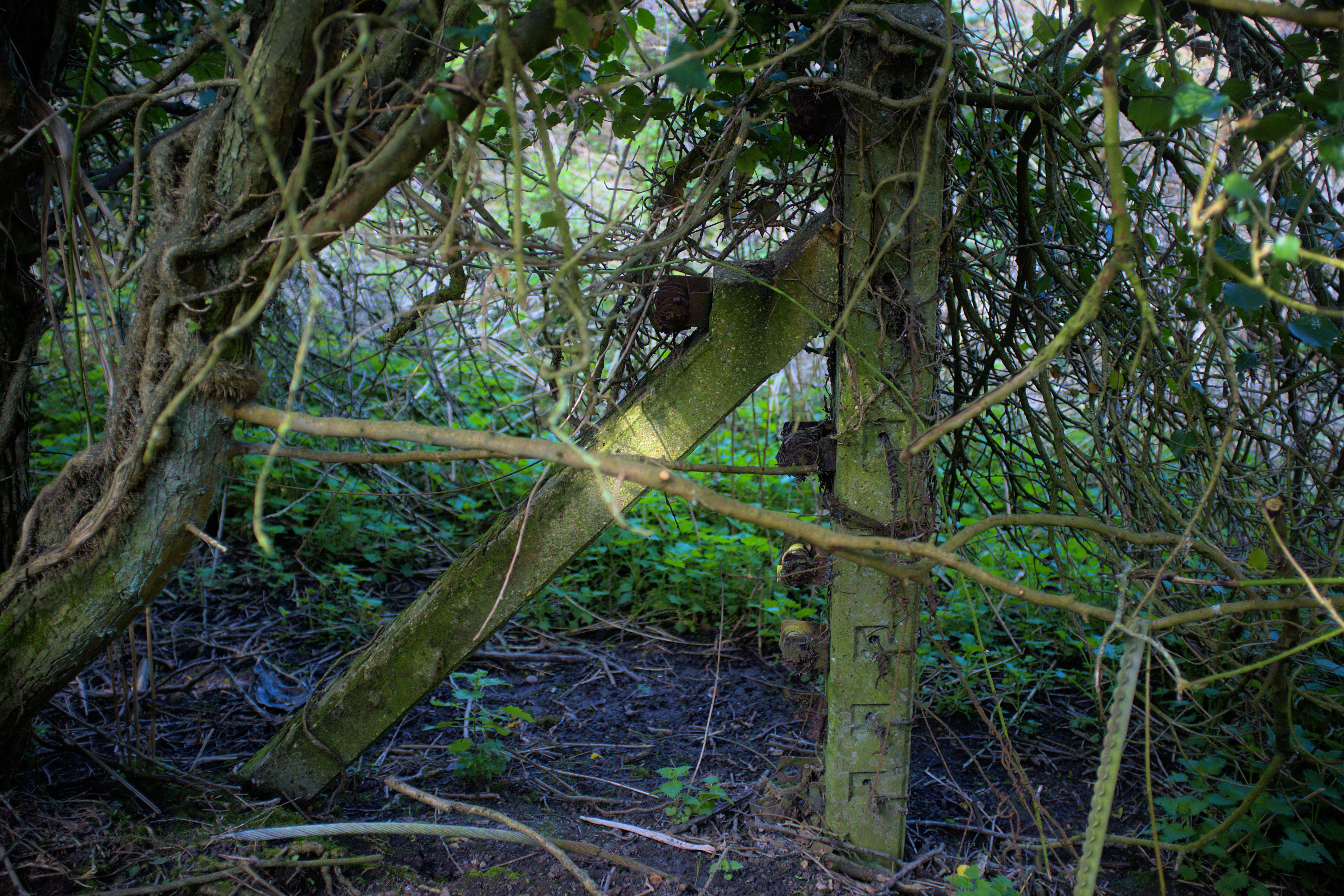
Or these concrete channels (probably for signalling equipment)?
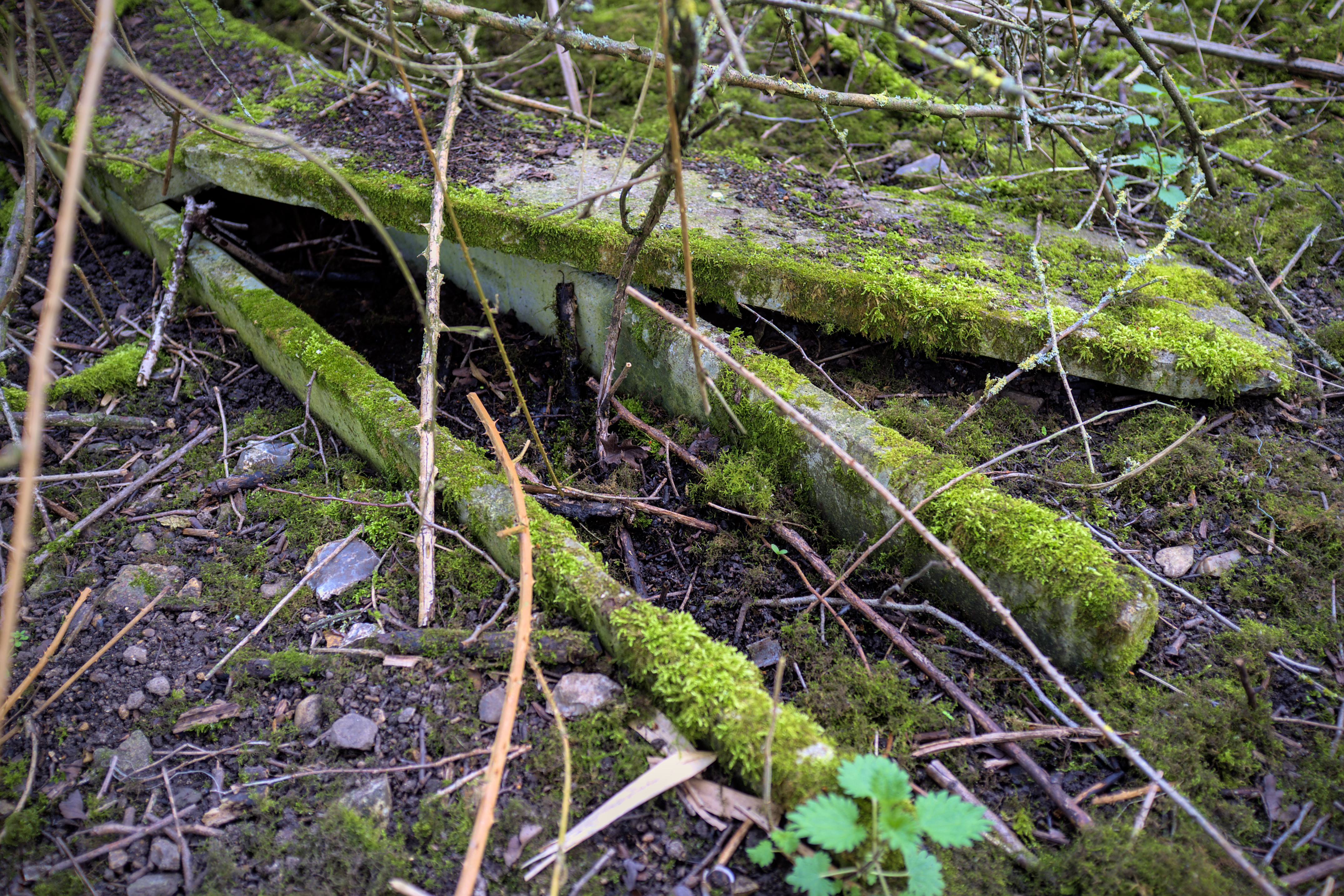
Or this rail chair?
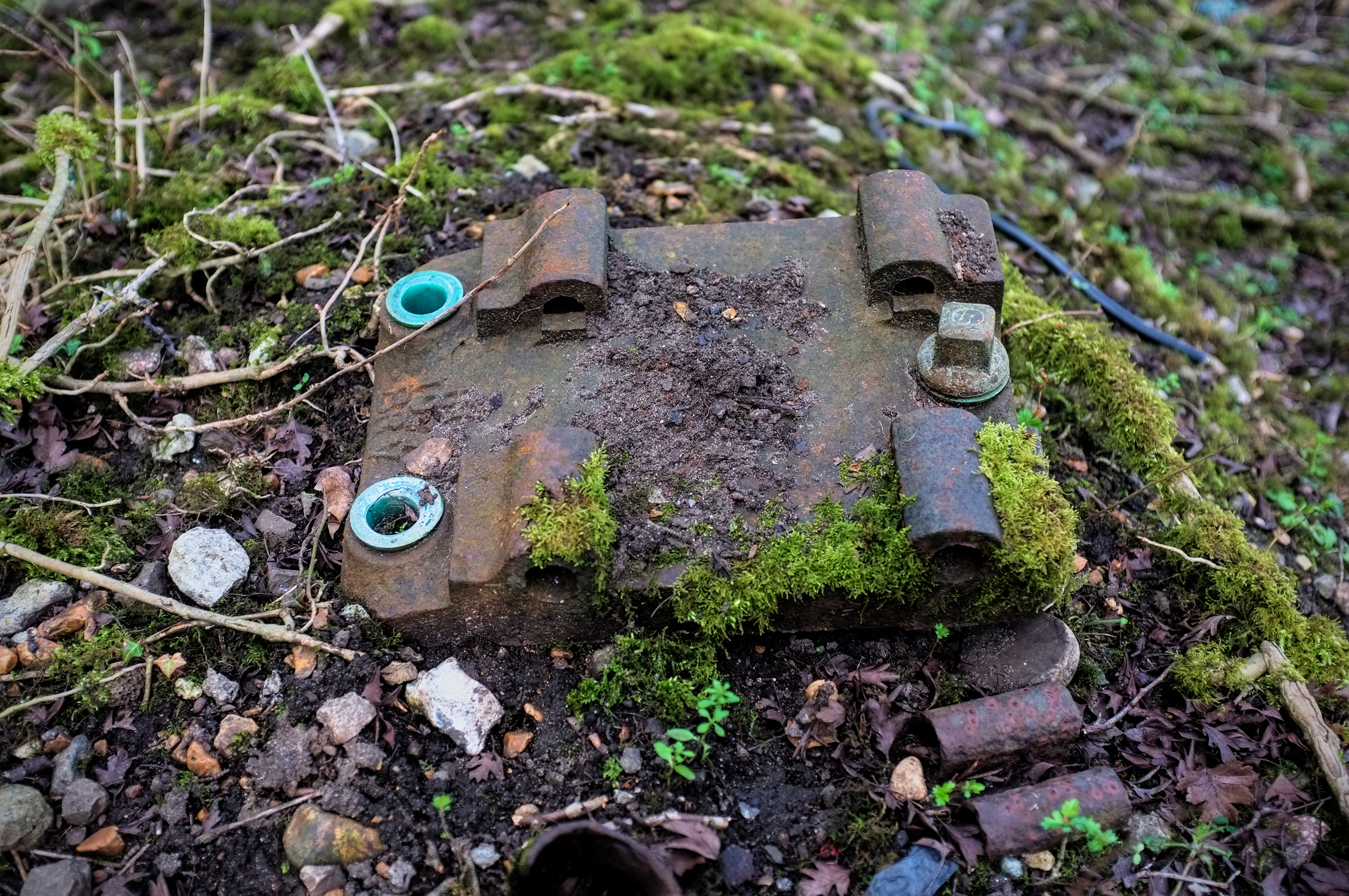
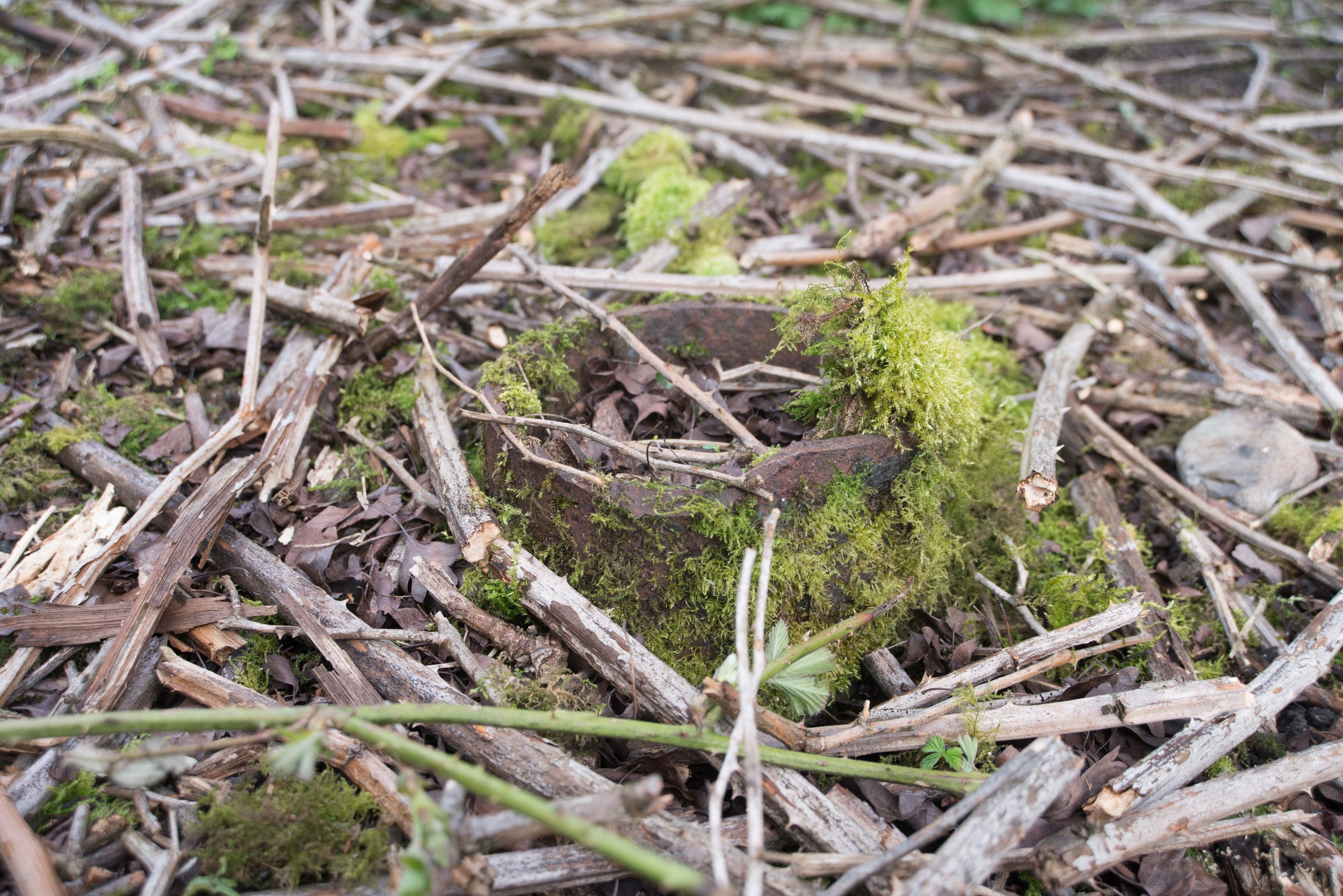
Or – and this is my favourite – what appears to be fragments of the lens for the colour light signal right next to it?
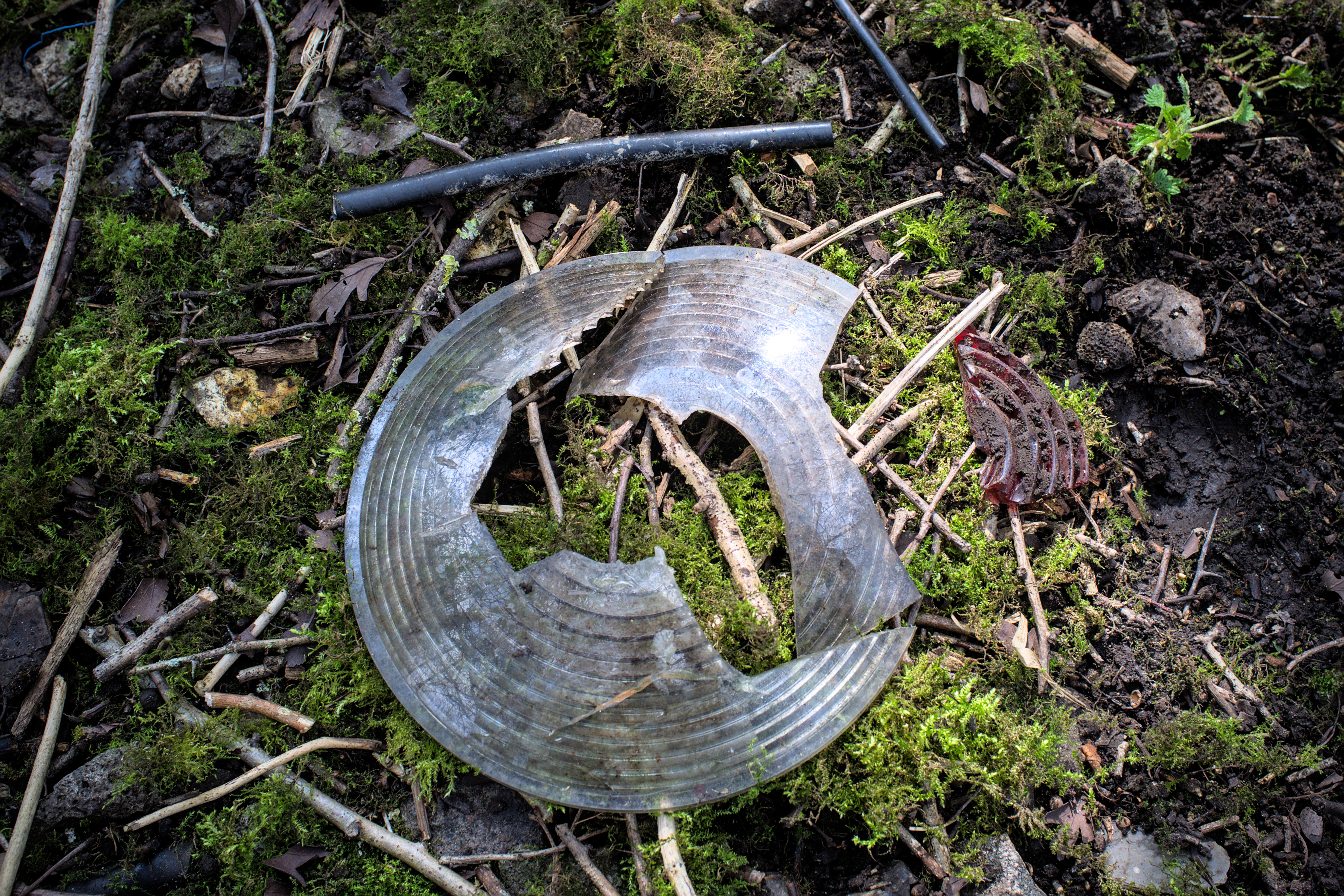
Amazing! Thanks to Alex and Norfolk’s Disused Railways for being there and taking the time to make a really close inspection of what was around. There’s a gallery at the bottom of this article with lots more photos of the assorted remnants – and I am not sure I photographed all of them.
Further reading & sources
- South Lynn bridges & Harbour Junction from Norfolk’s Disused Railways.