If you regularly travel down the Nar Ouse Way you may have spotted this concrete semaphore signal over on the grass, or in the wasteland, or whatever that area was when you last saw it. The below photo was from 2021, when it was not quite the wasteland it was in previous years but had not been landscaped yet.
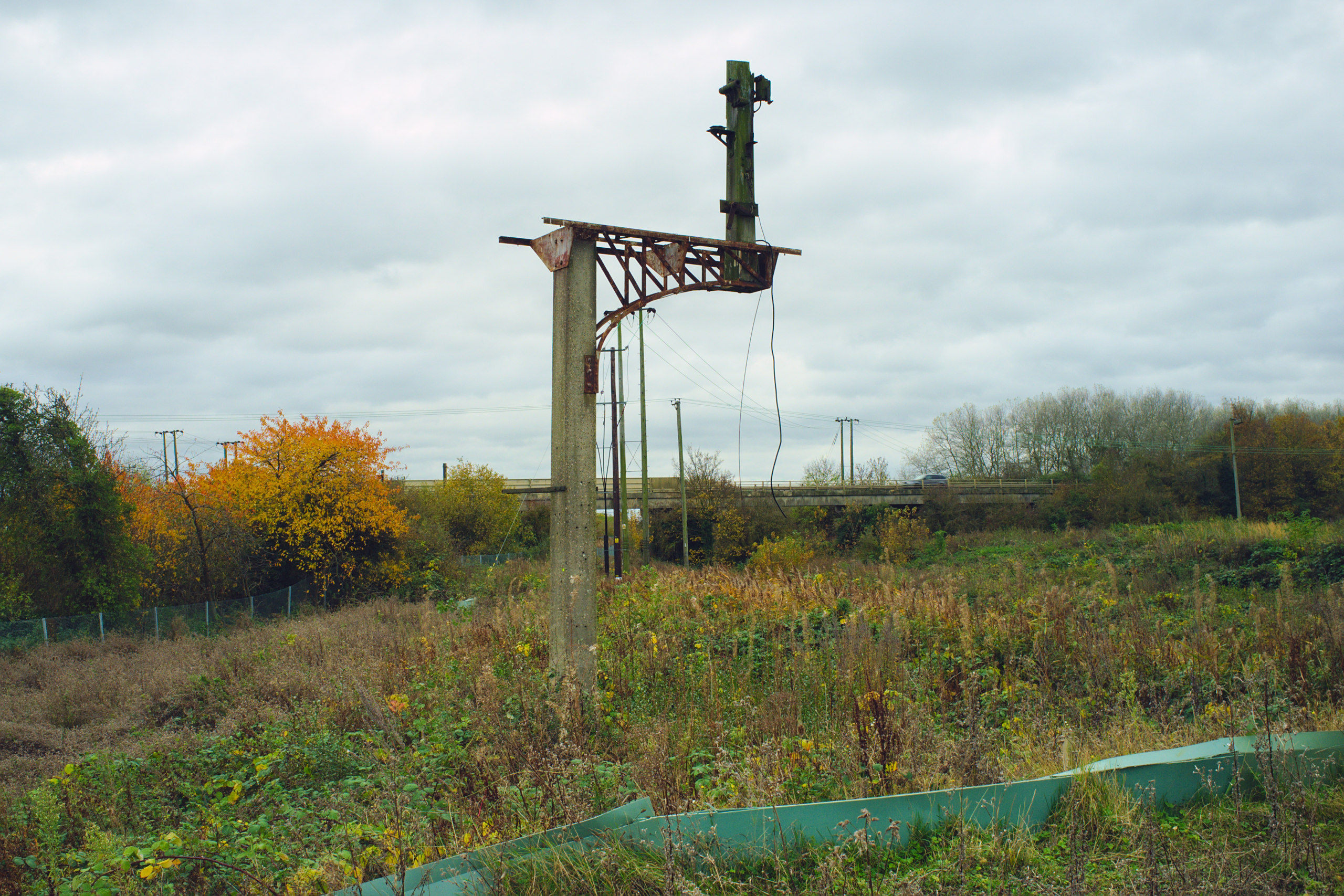
I’ve been aware of the signal for a while. I first found it in 2006; back then, access was a lot more difficult, requiring pushing a security fence out of the way. I probably have a photo of the signal itself somewhere, but the one I digitised all those years ago was of a very short section of rail and ballast (on the junction side of the signal).
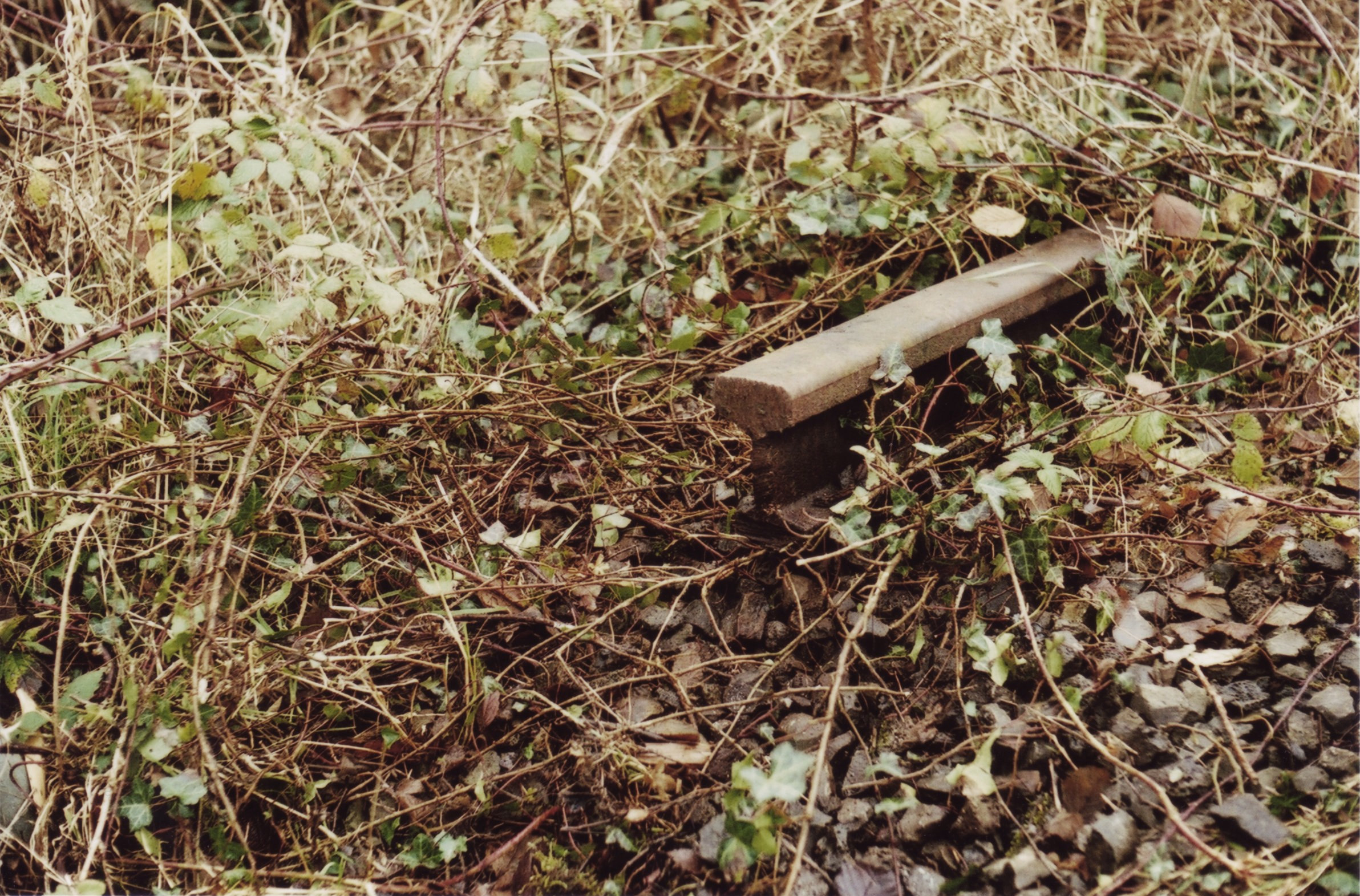
Back then, the junction still somewhat existed; it was out of use for over a decade but the When the track was lifted on the branch (very early 2000s, I believe) they only went this far for various good reasons. That bit of track would only have been removed when the junction was plain-lined in 2010. Back then there was another wooden beam from this signal in the undergrowth around it. It would have extended upward from the concrete post. That disappeared some time ago.
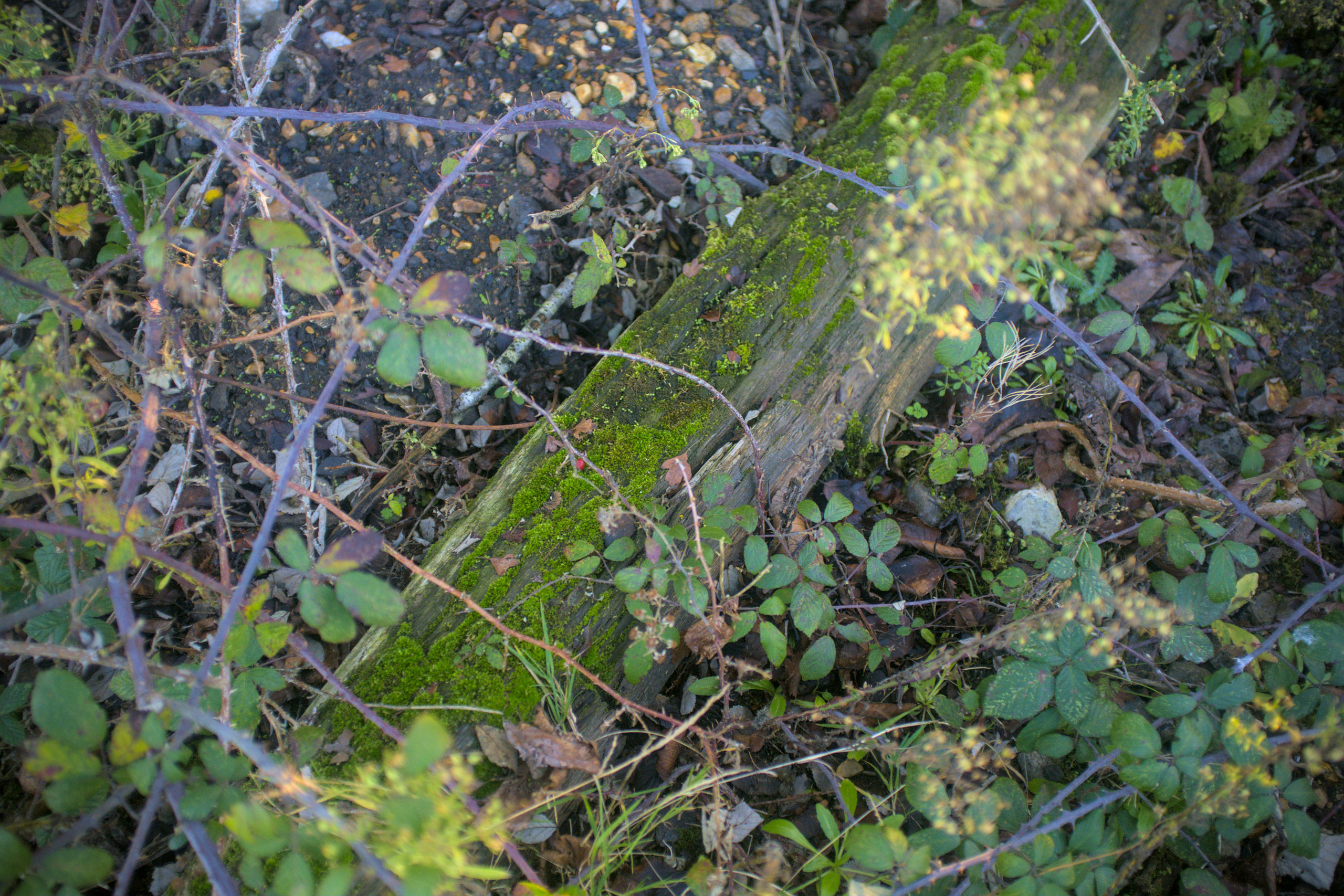
There’s no sign of the track that used to run under it, either. But if you look very closely you can find a stray sleeper or two in the immediate vicinity, in the undergrowth behind the fence guarding the railway.
This signal was controlled by Harbour Junction signal box. The signal post had two signals on it. One was a shunt signal that controlled movements to the South Lynn branch (HJ8). The other would have controlled movements on to the main line (HJ7).
This signal did not fall out of use when the Harbour Branch was closed. It actually fell out of use some time earlier, when Harbour Junction was (temporarily) converted into a ground frame in 1984. It was replaced with an electric light shunt signal (KL39) when Harbour Junction was resignalled for operation by the King’s Lynn Junction signal box in 1985. The changes to the track layout at Harbour Junction that happened at the same time meant there was no need for a signal to control movements onto the main line, because such a movement was not possible. That shunt signal no longer exists, which makes for the interesting detail of this signal outliving the signal that replaced it.
It (and all the other signals in the Harbour Junction area) were replaced because the operation of semaphore signals - wires and rods, rather than electrical cables - does not lend itself well to long distances, such as the 1.2 miles from Harbour Junction to King’s Lynn Junction. That’s why the railway needed so many signal boxes in the past, and why they are an endangered species today.
You can still see some of the mechanical wires that operated it on the signal today.
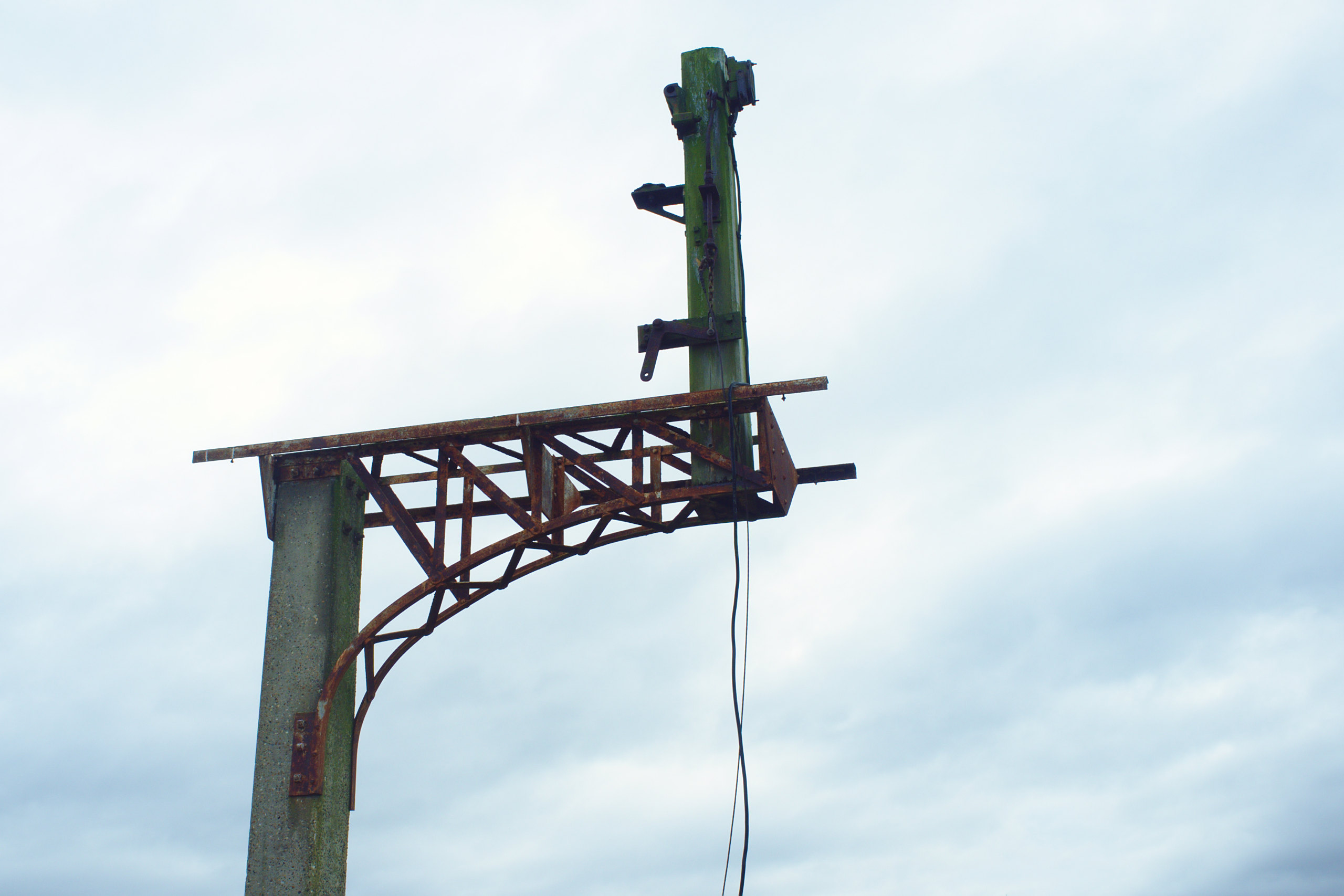
Unfortunately I did not have a long lens with me that day, and rarely do these days, but you can still admire the details a little. I didn’t have one the next time I visited either, but there was a nice blue sky.
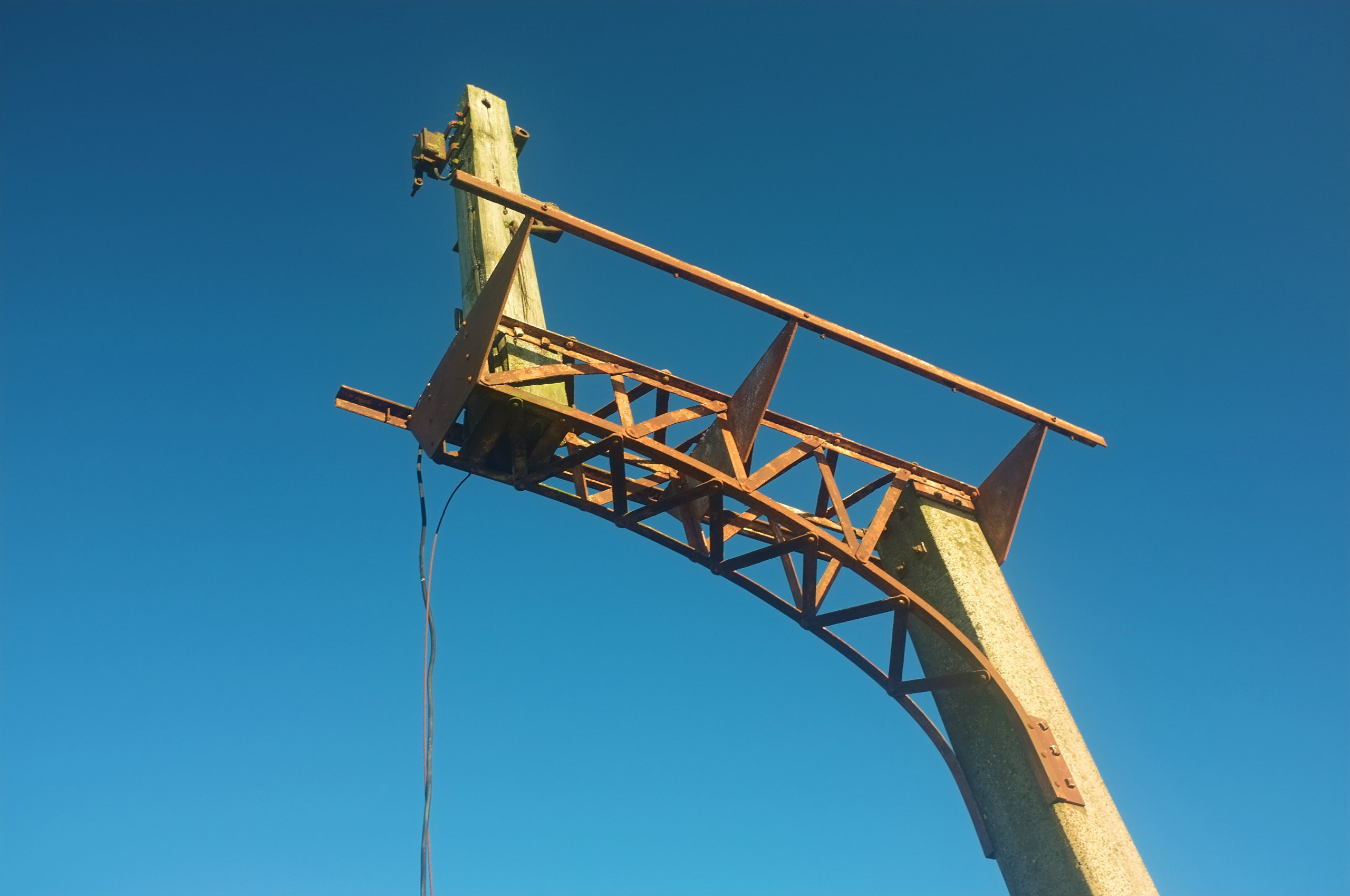
But if you really want to get good shots of those details, you’d send a drone. I’ve never quite been able to merit purchasing one, but the fellow behind Norfolk’s Disused Railways does, and that’s why we can see incredible views like the ones below.
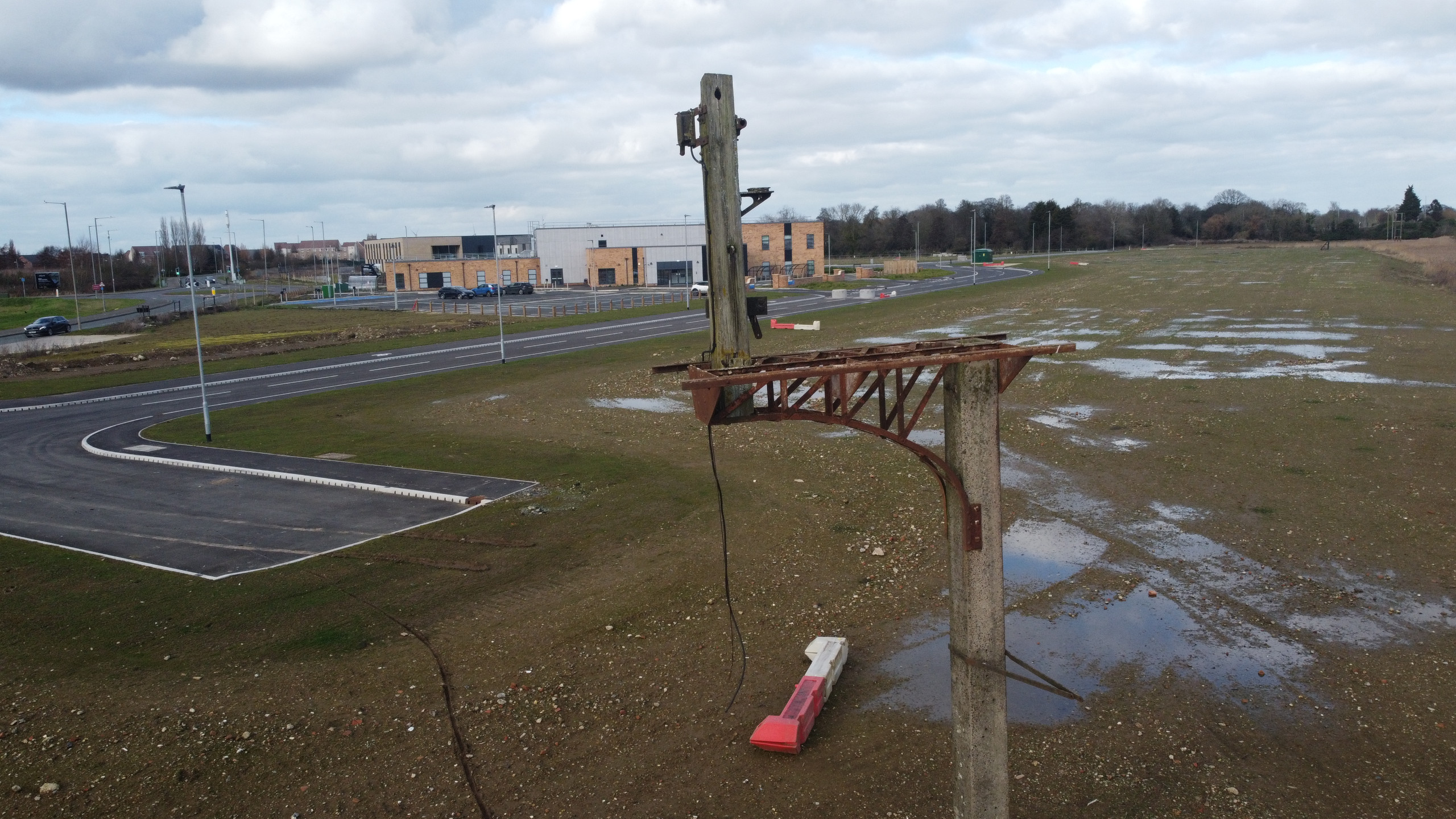
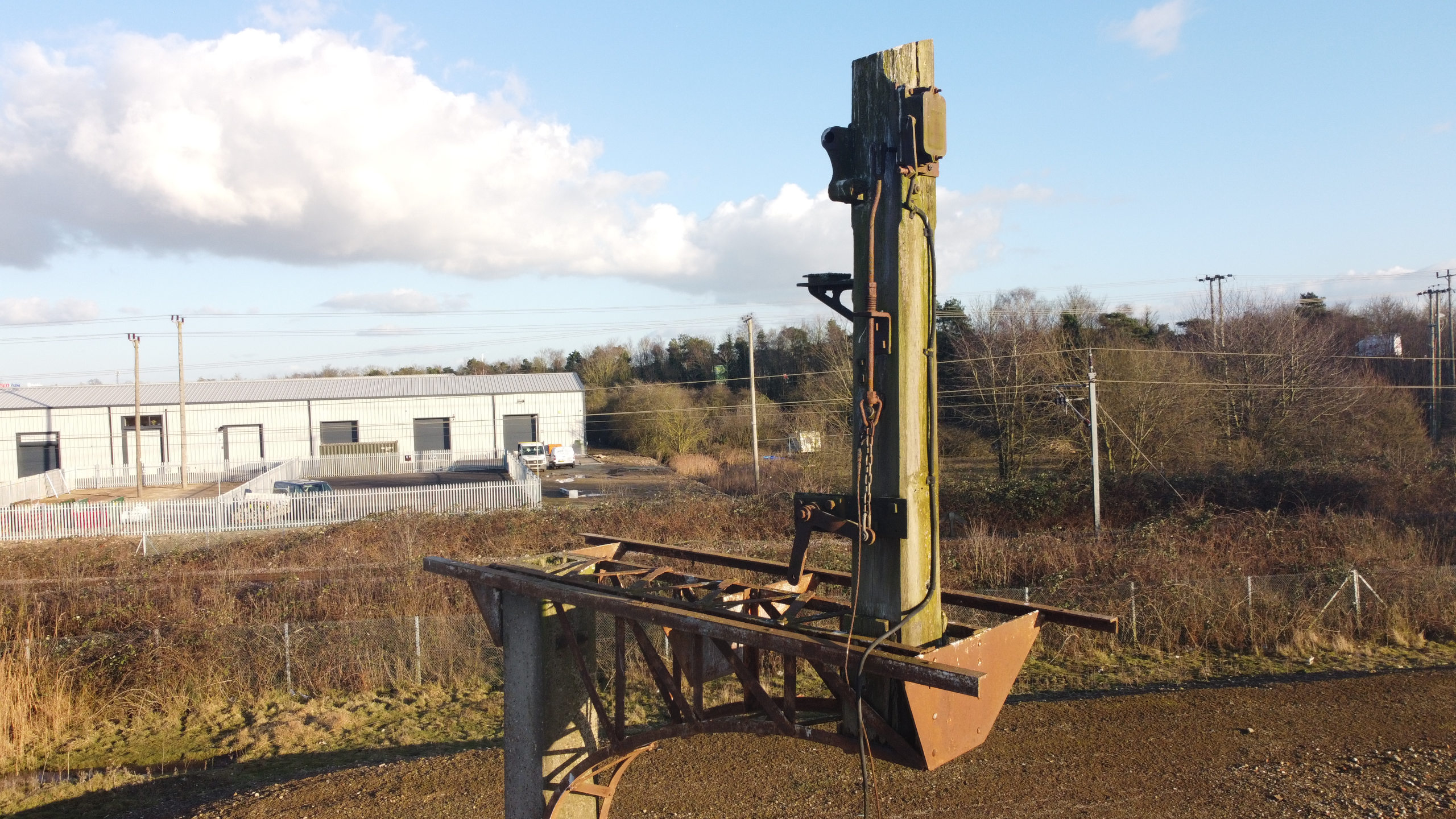
And well, it’s easy to complain about things These Days, isn’t it? But above, there are two high-resolution digital photos taken from someone’s remotely-operated computer-controlled semi-autonomous quadcopter, views that 25 years ago would have been impossible without the disposable income of the sort of person who can operate helicopters for fun. It’s not all that bad, is it?
Another thing to be grateful for is that this signal post still stands. With the land carefully landscaped around this signal, it does seem that the developers of the area have had a little historical sympathy. It would have been just as easy to bulldoze it with the rest of the area as it would to keep it standing, but someone decided not to. So the optimist in me says that this might be around for a while yet.