When I first visited King’s Lynn in 1999, I saw a disused railway wagon behind some Heras fencing, near the newsagent I was visiting on Wisbech Road to pick up my copy of Kerrang (I was that kid). I thought, “that’s odd”, then forgot about it, and only started thinking about it a few years later. Digital cameras were expensive back then, mobile phones certainly didn’t have cameras attached to them even for the people that could afford those (which wasn’t me), and I hadn’t developed an interest in photography which would have me using a film camera. And I hadn’t really developed my interest in railways; I thought trains were pretty neat and that was it.
All of which is to say I didn’t get any photos of it. Fortunately, Nigel Scarlett did, in November 1999, which nearly coincides with the time I first saw it.
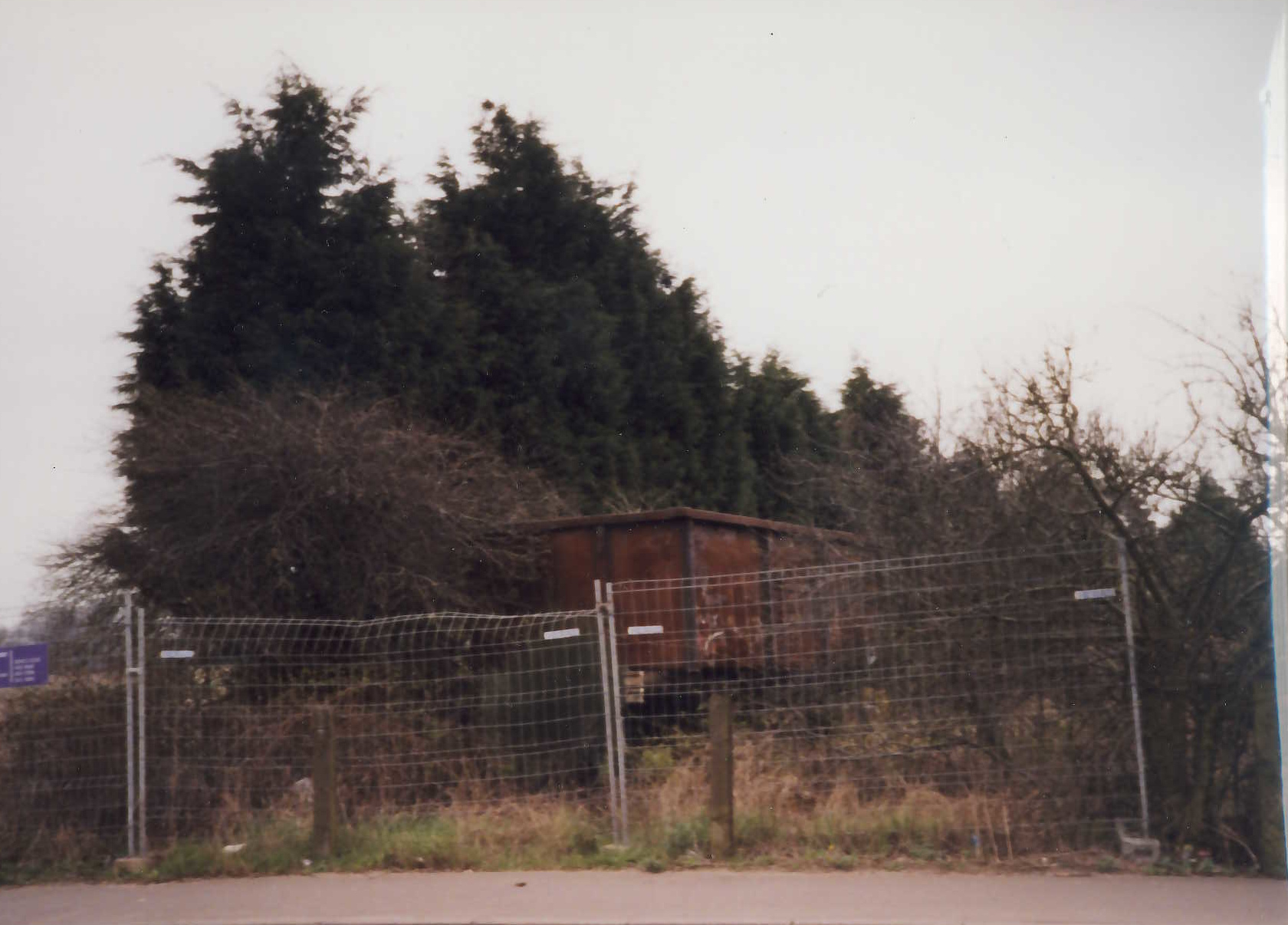
This wagon is B558090 (internal use number 041681; it was, on paper, in departmental use). It was a 16-ton mineral wagon built by Pressed Steel in 1957. These were first designed during World War II, for transporting coal. Tens of thousands more to the same design were ordered by British Rail after the war; at their peak there were over 300,000 of these.
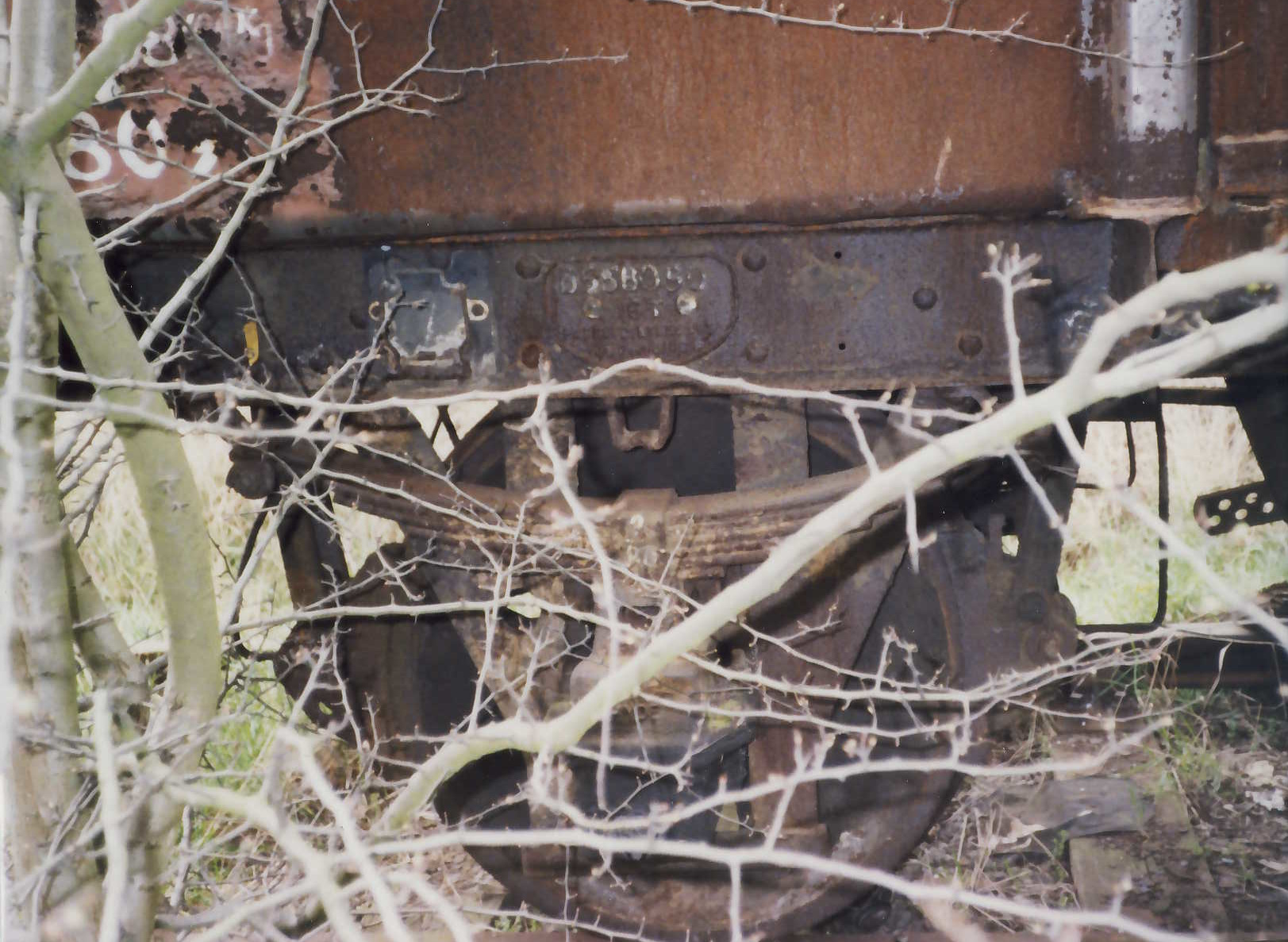
In the decades to come, small coal wagons like this became progresively less relevant. North Sea gas and cheaper electricity mostly took over the role of domestic heating, and merry-go-round trains formed of giant 32.5-tonne coal hoppers that could unload themselves took over the job of supplying coal power stations from about 1964 onwards. The post-war subsidisation and growth of the road network meant that what little demand there was for small coal loads could then be better supplied by trucks.
Yet these wagons were still useful; the need for small coal loads may have disappeared, but there was often a need for moving small loads of things. In B558090’s case, it found itself in this resting place simply by virtue of being a) transportable by rail and b) having some considerable mass.
Why this one first came to the Harbour Branch is a detail lost to time. We know it stayed there because it was used as a buffer stop. As described by the M&GN Joint Railway Society, the Polybulk grain wagons of the 1980s that ran on the remnants of the Harbour Branch were known to have weak handbrakes. The track of the Harbour Branch was slightly sloped towards Wisbech Road, so B558090 was placed at the end of the truncated Harbour Branch to stop runaway wagons. That might not have been the most glamorous way for a wagon to be used, but it did mean that it was put to some use, unlike the hundreds of thousands of others which got scrapped.
After the lifting of the remains of the Harbour Branch, this wagon was not rail-worthy, so it was left behind; it survived just because it was more effort to get rid of it than leave it in place. It remained there, with a tree growing through it, until at least 2003. Ray King of Traction Ads purchased it from the council & rescued it after that. It had been pushed aside into an embankment when the track was lifted, and it had to be repeatedly jacked and tipped to get it into a position where it could be towed down with his Land Rover for collection.
From there it lived at Hardingham station on the Mid-Norfolk Railway (though not owned by them). When it re-emerged into my view around 2012, it had been purchased by the M&GN Joint Railway Society, moved to the North Norfolk Railway, and was undergoing restoration; it was in a fairly sorry state after decades of disuse (and that’s decades even if you count being used for a buffer stop to be “use”).
A fun detail here is that I got the 1999-vintage photo above of B558090 from Nigel Scarlett in 2010. When I emailed him, he had no idea of the wagon’s whereabouts and reasonably assumed it had been scrapped. This same Nigel Scarlett ended up taking photographs of the restoration! Here is a photo he sent me with B558090 having a big chunk of its chassis being replaced.
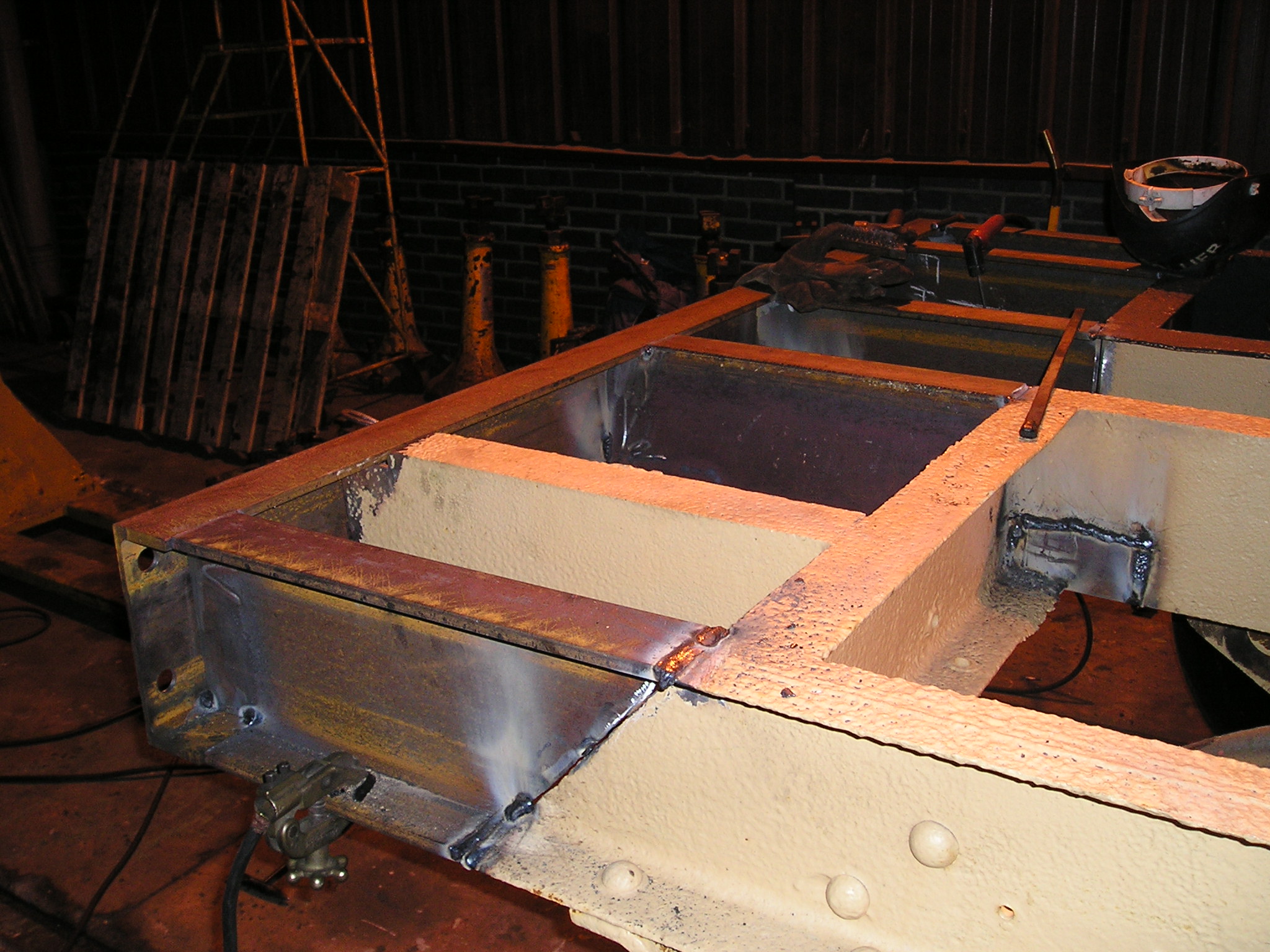
And so it has a second life as a visitor attraction at the North Norfolk Railway, and if wagons could expect things it wouldn’t have expected that.
As a fun bonus, someone made a three-pack of railway wagons for the game Roblox (a game which I gather is arbitrarily extensible, right the way up to operating your own railways in it, which is pretty wild). And, because of the webpage you are reading right now, I am sure you can guess which number the developer picked for the red 16-tonne mineral wagon in the pack.
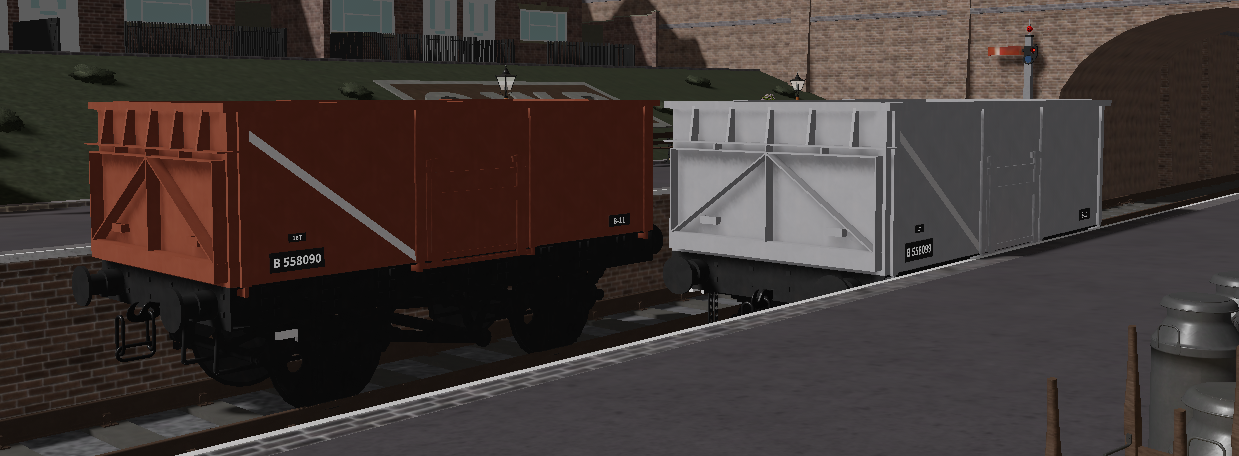
Which means B558090 got immortalised twice, as much as anything ever is; once in real life by the love and labour of volunteers, and a second time by video game developers who needed a number for a mineral wagon and picked that one. Isn’t that nice?
Sources & more reading
- Britain’s Railways: A Lifetimes Journey by Ray King, ISBN 9-781738-467235
- The North Norfolk Railway’s stock list featuring B558090
- History of this wagon from the M&GN Joint Railway Society
- B558090’s entry on the Departmentals site.
- BR 16 Ton Steel Minerals - what else did they carry? (forum post)